

There's a conversation happening in boardrooms across the tech industry, and it's making founders uncomfortable.
Investors are asking harder questions about defensibility. "What stops a competitor from replicating this in six months?" The honest answer, more often than not, is nothing. Not anymore.
The technical moats that founders spent years building are being undermined by a force most didn't see coming: AI that can code.
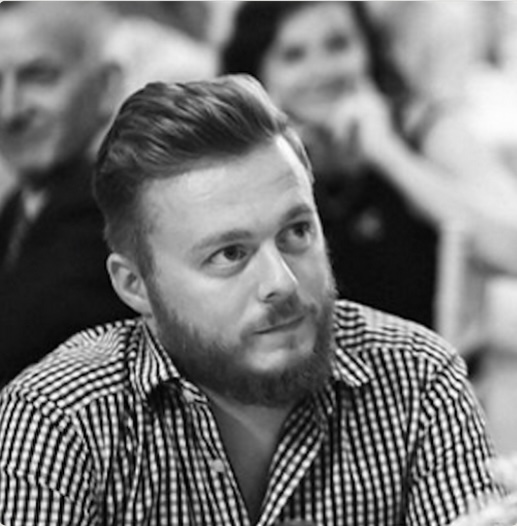
Draven McConville, the founder of Klipboard and investor, has watched this transformation accelerate. His conclusion? Most SaaS founders are preparing for the wrong battle.
"AI and AI-assisted code editors will fundamentally disrupt SaaS," McConville says. "They're lowering the barrier to entry, which ultimately means more competition. It’s more important than ever to have a strong brand and fundamentals."

It's a message the industry needs to hear, even if most founders aren't ready to accept it yet.
For years, building a successful SaaS company meant solving hard technical problems. Real-time collaboration. Complex scheduling algorithms. Sophisticated data processing. If you could build something technically difficult, you earned years of runway before competitors caught up.
That equation is breaking down.
AI coding assistants can now generate functional code from natural language descriptions. What took experienced developers weeks to build can be prototyped in hours. The gap between having an idea and shipping a feature is shrinking dramatically.
"A two-person startup with the right AI tools can vibe code features that used to require an entire engineering team," according to McConville. "We're seeing the playing field level in ways that benefit small, agile teams."
This isn't theoretical. It's happening now. Markets that could only support a handful of well-funded players might suddenly face dozens of viable competitors. Your killer feature that took six months to build? It can be replicated in weeks, maybe even days.
So if technical capability becomes commoditised, what creates lasting competitive advantage or differentiation?
McConville's answer surprises many tech founders: brand.
"Your brand is so much more than a logo or a tagline," he says. "A true brand goes beyond appearances. It creates an emotional and cultural bond that resonates deeply with both customers and employees."
Coming from a background in brand and creative agencies, McConville has always viewed this differently than most technical founders. At Klipboard, he applied lessons from the creative industry to a tech business to great success.
He says that brand is more critical than ever for SaaS businesses. "With so much choice in tech, consumers gravitate toward brands they trust. Tech alone doesn't build trust. Brand does."
McConville keeps returning to a simple principle. "I believe that people buy from people, and the ability to inspire and build trust is crucial for success."
This becomes more valuable as technical differentiation fades. When multiple products can solve the same problem with similar features, customers choose based on trust and relationships.
During Klipboard's growth, McConville saw this repeatedly. It was technical features that got them in the door, but it was relationships that kept customers for years. "You need to understand customers' needs and build products that address those needs, rather than chasing the latest trends or features," he says.
So while AI can replicate your code. It can't replicate five years of customer trust.
Many founders with a technical background resist this message, viewing brand as superficial compared to their core product’s development. That, according to McConville, is a strategic mistake that could prove fatal.
"We're entering a time where SaaS businesses will be defined by more than just technology," he says. "The companies that build strong brands and fundamentals alongside great products will be the ones that survive and grow. Those that rely on technical moats alone will find themselves vulnerable."