
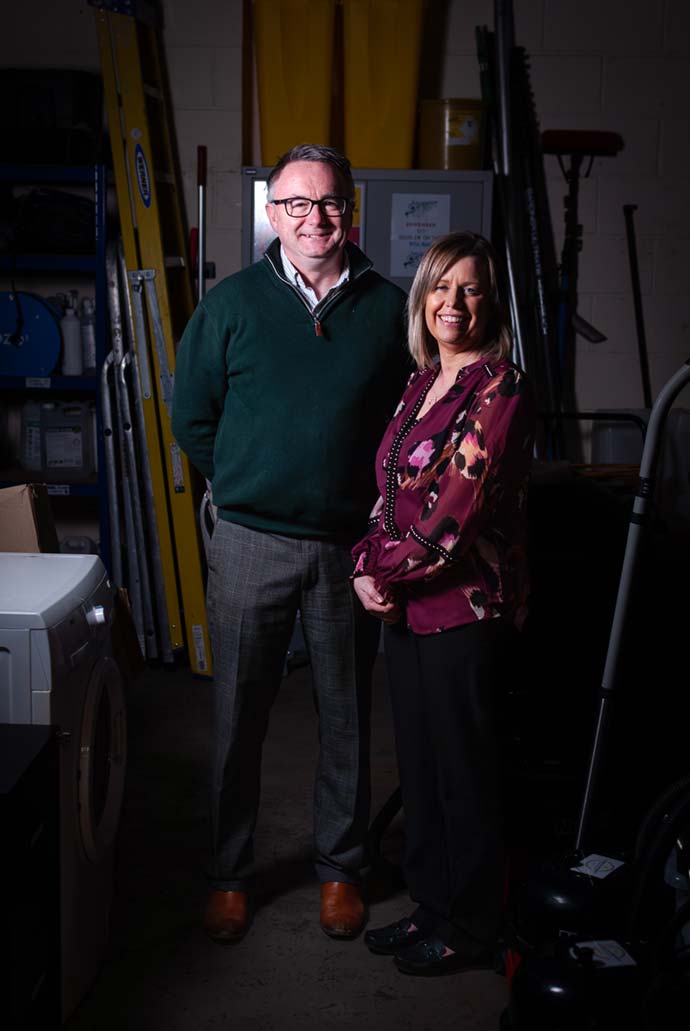
For more than three decades, Wayne and Lisa Barlow have built a reputation in Doncaster for tackling jobs many businesses would rather avoid. Through their company, Clean N Bright, the couple have grown from a small window cleaning operation into a specialist commercial and biohazard cleaning firm dealing with everything from hoarder properties to trauma scenes and drug dens.
It is not glamorous work. At times, it can be emotionally demanding and physically challenging. But it is also work that requires discretion, trust and resilience – qualities that have helped the business remain strong in a changing industry.
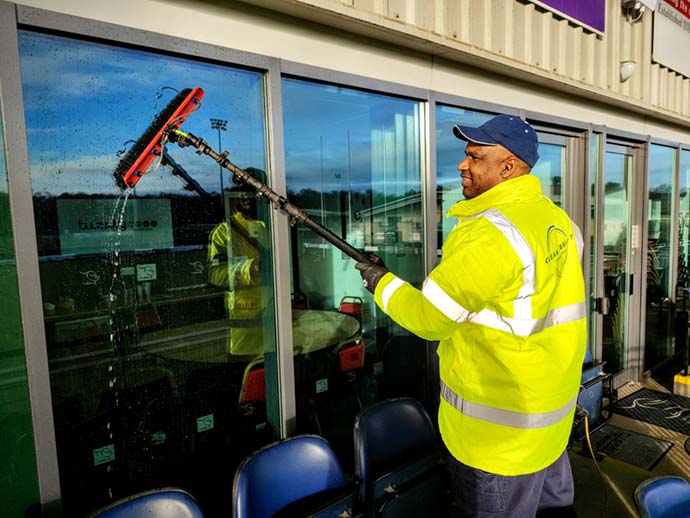
From those early days, things grew organically. While carrying out window cleaning for commercial clients, customers began asking if Wayne could help with other tasks.
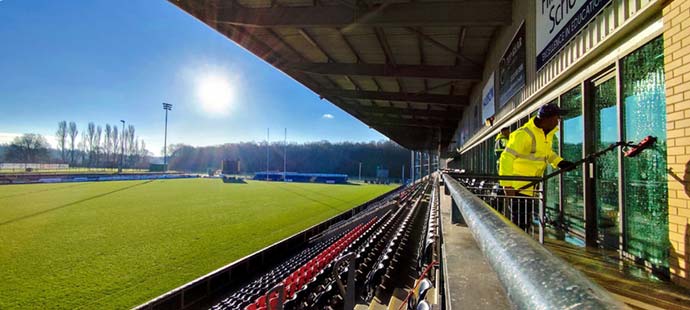
“When you were doing the window cleaning, then occasionally on the commercial work, people used to start asking for, can you find an office cleaner? So we took on a couple of services and that’s how the office cleaning started really – it was just generally people asking,” Lisa tells unLTD.
At the time, she was working part-time in the NHS while supporting the business behind the scenes. As demand increased, the couple began to realise there was an opportunity to build something more substantial. Commercial cleaning, however, is a crowded marketplace, so they began looking for ways to stand out.

“We really just thought we needed a unique selling point,” Lisa says. “A lot of companies offern commercial cleaning, so we were looking for a niche.”
That moment of inspiration arrived unexpectedly during a family holiday in Wales, where the couple met someone running a crime scene cleaning academy.
“I remember thinking, I reckon I can do that,” Wayne says. “And when we realised nobody around Doncaster was really doing it, we thought we’d give it a go and see what happens.”
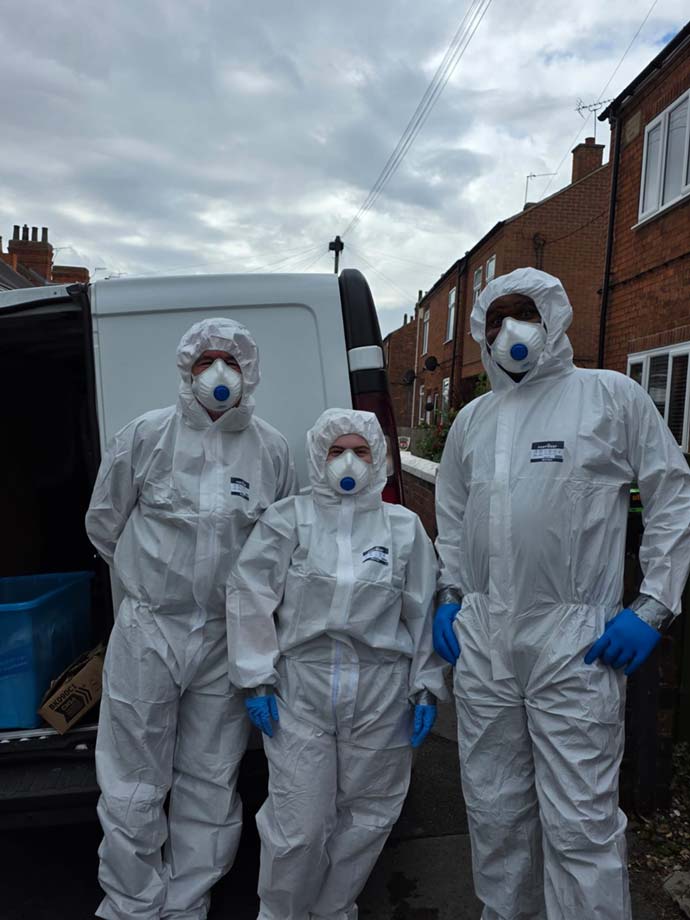
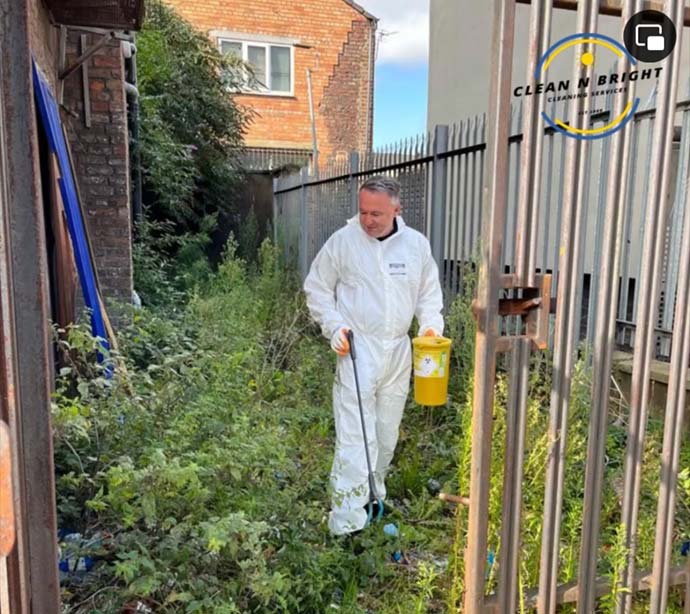
After completing specialist training, Wayne began taking on trauma and biohazard cleaning jobs – a niche area that requires not only technical knowledge but also a strong stomach and a calm mindset.
“You can’t think about it as what it actually is,” he explains. “You look at it and think – there’s something there, I need to clean it and make it safe. Then you move on to the next bit.”
“It’s not for everybody,” Lisa adds. “But someone has to do it and it’s an important service. Some people would really struggle, but Wayne just gets on with it.”
The work can involve anything from hazardous waste to deeply sensitive situations following deaths or serious incidents.
“It can cover anything from bodily waste to sewerage waste to pigeon guano,” Lisa explains. “We’ve also done asbestos training now so the team can manoeuvre that safely as well.”
Today, Clean N Bright employs more than 20 staff and operates across two main areas: commercial cleaning contracts and a specialist operations team that handles trauma, hoarder and hazardous cleaning jobs.
Much of the specialist work comes through housing associations and local authorities, although sometimes the calls come directly from families facing difficult circumstances.
One case in particular has stayed with Wayne. “There was a man who’d passed away at home,” he recalls. “His mum rang us and she was obviously very upset. We cleaned everything up but she still couldn’t go into the flat for a good while afterwards. I said, take your time – we’ll walk round together. She rang later to thank me for that.”
Moments like that reinforce the importance of the service they provide.
“You can’t make a situation like that easy,” he says. “But you can take at least some of the trauma away.”
Not every job involves trauma, but many still present complex human situations. Hoarder cleans, for example, are often tied to mental health issues and can require careful handling.
“We did one recently where the fridge freezer hadn’t been plugged in for years,” Wayne says. “You can imagine the smell. But the householder still didn’t want it throwing away – she said she’d clean it. Trying to explain that it wasn’t safe anymore was really difficult, but you’ve got to be patient and professional.”
The work can also occasionally involve unexpected risks. Clean N Bright appeared in a Channel 4 documentary about crime scene cleaning after agreeing to film a drug den clearance.
“We had to film most of it ourselves,” Wayne explains. “Channel 4 only came for one day and we had cameras on us the rest of the time.”
He explains how things nearly escalated when someone mistook the team for police.
“A guy came charging at us because we were in white suits and he thought we were the police. When he realised we weren’t, he completely changed and started apologising.”
For Wayne, situations like that are handled with calm conversation rather than confrontation.
“If you meet people like that, you just talk to them like a normal person. You’re not there to judge them – you’re just there to do your job.”
Despite the unusual jobs, the majority of the company’s work remains traditional commercial cleaning. Like many in the industry, however, the Barlows have faced rising costs and increasing competition in recent years.
“Cleaning still gets looked at as a low-level service sometimes,” Wayne says. “But during Covid cleaners were classed as essential workers. Places wouldn’t open without them.”
He adds that operating a responsible business – with proper wages, pensions and training – can make pricing difficult when competing with self-employed operators.
“We’re all for people having a better living standard,” he says. “But when you’re competing against someone who doesn’t have to pay holiday pay or pensions, it can be tough.”
As with many industries, rising supply costs have had an impact.
“We had a contract where we didn’t realise how much the price of toilet paper had gone up,” Wayne says. “By the time we looked at it properly we were actually losing money on the job.”
Despite the challenges, the couple believe their longevity comes down to a straightforward philosophy.
“We’re friendly and approachable,” Wayne says. “We’re not here to rip people off – we’re here to give a service and build relationships with clients and staff.”
Looking ahead, their focus is on ensuring the business can continue to grow beyond them.
“We’d like to leave something well established within the community,” Lisa says. “A business that people respect – something that lasts.”