
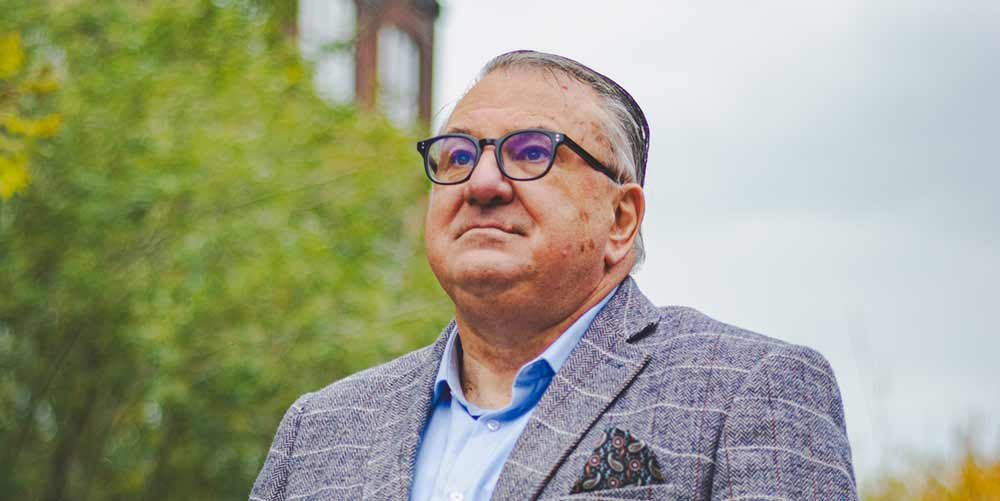
Deon Jacobs began his career in banking in his native South Africa. Since then, he’s worked in international hospitality, secured Sheffield Arena’s first major paid sponsorship deal and gone into business both in partnership and on his own. He spoke to unLTD about what he’s learnt along the way and how a story he’d carried for years became his first novel, The Bridge.
Take us back to the beginning. How did you first get into the world of business, and what did your early career at Barclays in South Africa teach you?
I started my career with Barclays DCO – Barclays Dominion, Colonial and Overseas – in South Africa, and it was an extraordinary introduction to the business world.
Barclays was a powerful international organisation, but what made the biggest impression on me was its willingness to challenge the society around it. It employed people from across South African society at a time when apartheid dictated otherwise, and I was fortunate from a young age to work alongside, learn from and become friends with people from many different backgrounds.
Professionally, banking taught me discipline, attention to detail and the importance of trust. I worked in areas including foreign exchange, exchange control and share dealing, and it gave me a grounding in financial services and commercial decision-making that has stayed with me throughout my career.
But perhaps the greatest lesson was about people. Whatever industry you work in, business ultimately comes down to relationships.
You’ve worked across a wide range of sectors, from banking and property to hospitality and leisure. Where do you feel most at home?
I feel most at home when I am serving customers in one way or another.
A friend once told me about his grandfather, who worked in service in a large stately home. His philosophy was: “I live my life with a servant’s heart.”
My friend went on to become a very senior director in international banking, working in both the UK and Australia, but he carried that philosophy throughout his career. It really resonated with me.
For me, service isn’t about status. It could be helping an international superstar who has got lost backstage at Sheffield Arena, carrying a tray of coffees for an elderly couple, helping somebody launch their first business, or saving a company thousands of pounds on its card-processing costs.
I get the greatest satisfaction from helping people. Living with a servant’s heart probably describes my approach to both business and life better than anything else.
You’ve held senior commercial roles with some major organisations, including IHG and Sheffield Arena. What were those experiences like, and what did you take away from them?
We all make career decisions we would change if we could, and one of my biggest regrets was leaving Sheffield Arena.
The strange thing is that I left because things were going so well. We had achieved an enormous amount. I secured the Arena’s first major paid sponsorship deal, which brought significant revenue into the venue, sold out the hospitality for virtually every major concert and filled the available advertising inventory.
Eventually I felt I had run out of challenges and, because I was ambitious and probably a little impatient, I decided it was time to move on.
Looking back, I should perhaps have appreciated what I had. I worked for one of the best leaders I have ever encountered, David Vickers, and I genuinely loved my time there.
IHG and the wider hospitality industry also taught me enormously about sales, customer service, commercial partnerships and the importance of making people feel valued.
Those experiences reinforced something I have believed ever since: great leadership and great culture are incredibly valuable, and you should never take either for granted.
Tell us about your current work as an independent payments consultant and business broker. What does a typical working week look like, and how do you help your clients?
I have worked within merchant services for nearly ten years and, even when I became involved in other business opportunities, I never completely left it.
I was fortunate to have an excellent support team who continued looking after my portfolio while I was working on other projects, and I remained available to my clients whenever they needed me.
Today my client base ranges from major football clubs, large food franchises and industrial manufacturers through to solicitors, restaurants, independent coffee shops, hairdressers, beauty salons and start-ups.
A typical week involves several networking events, client meetings, reviewing existing payment arrangements and visiting businesses I already work with. Much of my new business comes from recommendations and referrals, which I regard as the greatest compliment a client can give me.
I also spend time helping people starting new businesses. When someone asks me about card payments or EPOS, the conversation often naturally develops into pricing, customer service, cash flow, marketing or general business issues. I am very happy to offer that experience and advice without charging for it.
I work with DNA Payments, one of the UK’s established payments businesses, which provides merchant services, card terminals, EPOS, eCommerce and online payment solutions. My role is to be the person the client actually knows — someone they can call rather than simply being an account number.
You work with everyone from independent start-ups to major organisations. What are some of the most common challenges you help businesses overcome?
Business owners are incredibly busy. They review wages, utilities, insurance, stock and rent, but payment-processing costs can sit quietly in the background for years.
Those costs can gradually increase, and unless somebody takes the time to review them, the business may never realise how much it is paying.
I recently worked with a substantial manufacturing and retail company that had not properly reviewed its card-processing costs for around ten years. By carrying out that review, we identified savings of approximately £25,000 per year.
Another area is PCI compliance. Merchants normally have ongoing PCI responsibilities, but these can easily be forgotten. If that happens, additional non-compliance charges can appear on statements.
Sometimes my role is simply to notice the things that a busy business owner hasn’t had time to notice.
How has the business landscape changed during your career, particularly when it comes to building relationships and winning new clients?
Technology has transformed business. We have LinkedIn, email, video meetings, online applications, digital marketing and an enormous amount of information at our fingertips.
But I don’t think the fundamentals have changed. People still buy from people they trust. Most of my business continues to come through networking, recommendations and relationships rather than cold selling.
What has changed is that businesses have to be more careful about who they deal with. Payments is a regulated industry, and good providers invest heavily in compliance and training. At DNA, for example, we undertake regular training covering areas such as anti-money laundering, fraud prevention, Know Your Customer requirements, bribery and other regulatory responsibilities.
I always advise businesses to do their homework before signing any financial-services agreement. Understand who you are dealing with, what you are signing, what the full costs are and what support you will receive afterwards.
A cheap headline price can become very expensive if the service behind it isn’t there.
What have been the biggest challenges you’ve faced throughout your career, and how have you overcome them?
I think everybody in business occasionally asks themselves: “Am I actually good enough?”
When business is slow, opportunities disappear or something doesn’t work out, self-doubt can creep in. My answer has always been the same: keep going.
That philosophy has become particularly important for my family recently. Our son has been seriously ill and has spent almost a year in hospital. My wife and I share the responsibility of visiting him and supporting him, including sharing weekends so that each of us occasionally gets a day to recharge.
I have continued working throughout because routine and purpose are important to me, but it certainly puts business problems into perspective.
Most importantly, we haven’t given up hope. You have to believe in a positive outcome, even when the journey is difficult.
What’s the most valuable business lesson you’ve learned over the years?
One lesson I have learned through experience is that I personally would be extremely cautious about entering another business partnership. Even with the best intentions, partnerships can become difficult when responsibilities, effort or expectations become uneven.
My preference now is to take responsibility for my own decisions. If I succeed, I know why. If I make a mistake, it is my mistake, and I can learn from it.
Mistakes are part of business. The important thing is not avoiding every mistake – that is impossible – but making sure you learn from them and don’t continually make the same ones.
What advice would you give to someone in business or looking to build a successful career in sales and business development?
There is a poem by Edgar A. Guest called Don’t Quit that I have always liked. The message is simple: sometimes success is much closer than you think when you are tempted to stop.
Secondly, read and learn constantly. Every day should teach you something you didn’t know yesterday. Read books, listen to people, ask questions and remain curious.
And find a great mentor. One good mentor can save you years of mistakes – although you will still need to make a few mistakes of your own.
Finally, look after people. If you build a reputation for doing what you say you will do, answering the telephone when there is a problem and genuinely caring about your customers, people remember.
Alongside your commercial career, you’ve recently turned your hand to writing. Tell us about your debut novel, The Bridge, and what inspired you to write it.
I have been an avid reader since I was a very young boy growing up in Roodepoort, South Africa. During school holidays I would walk to the library, take a book home, devour it and return for another. At one point I decided I wanted to read every book in the children’s section – and when I eventually did, I moved on to the adult shelves.
For years afterwards, whenever I went on holiday, my suitcase probably contained more books than clothes. Kindle has at least solved that problem!
I have also always been a dreamer. During difficult periods, particularly nights when I couldn’t sleep, I would create stories and characters in my head. One particular story stayed with me for years.
Over the past year, while supporting our son and spending many hours at the hospital, I finally started putting it onto paper. That story became The Bridge.
It is a historical novel spanning the First and Second World Wars, but fundamentally it is a story about people. The characters reflect many of the values that matter to me personally: honesty, integrity, loyalty, friendship, love, honour and having the courage to do what you believe is right. It stands alone as a novel, but it is also intended to become the first part of a trilogy following the families and their world through subsequent generations.
I am currently seeking literary representation, and I have also launched an author website at deonjacobs.co.uk, where people can discover more about the novel and the story behind it.
How have you found the experience of writing a novel alongside your business commitments? Are there any similarities between the two disciplines?
Both require discipline, planning, resilience and the ability to keep going when things aren’t happening as quickly as you would like.
In business, you can have weeks when every conversation seems to produce an opportunity and others when nothing happens.
Writing is similar. Some days the ideas arrive faster than you can type them. On other days you can stare at the screen and wonder where they have all gone.
The important thing is to continue ploughing the field and planting seeds. Not every seed grows immediately. Some take time – but occasionally one grows into something more beautiful than you originally imagined.
That applies equally to writing, sales and life.
Finally, what’s next for you?
I want to continue living my life with a servant’s heart.
Professionally, that means continuing to provide my clients with great service, helping businesses reduce unnecessary costs and being somebody they know they can call when they need help.
With my writing, the ambition is simple to describe even if it may be rather harder to achieve!
I want to see The Bridge published. I want to complete the trilogy. And yes, I would love to see those stories adapted for film. I can already visualise myself standing on the red carpet at the Cannes Film Festival with my family and closest friends. If you’re going to have a dream, you might as well make it a big one.
Beyond business and writing, I want to continue contributing where I can, supporting the charities that are close to our hearts and helping people whenever I am able.
Ultimately, success for me isn’t only about what you achieve. It is also about who you help along the way.