
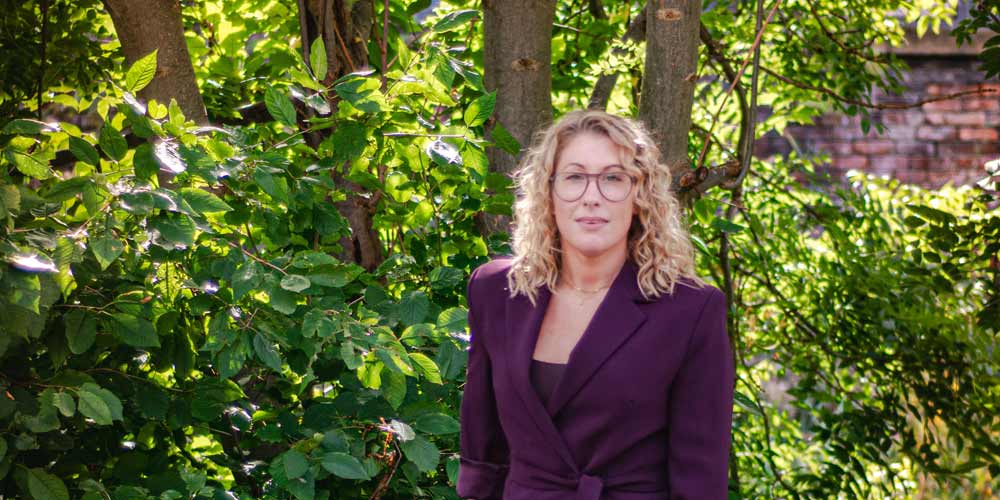
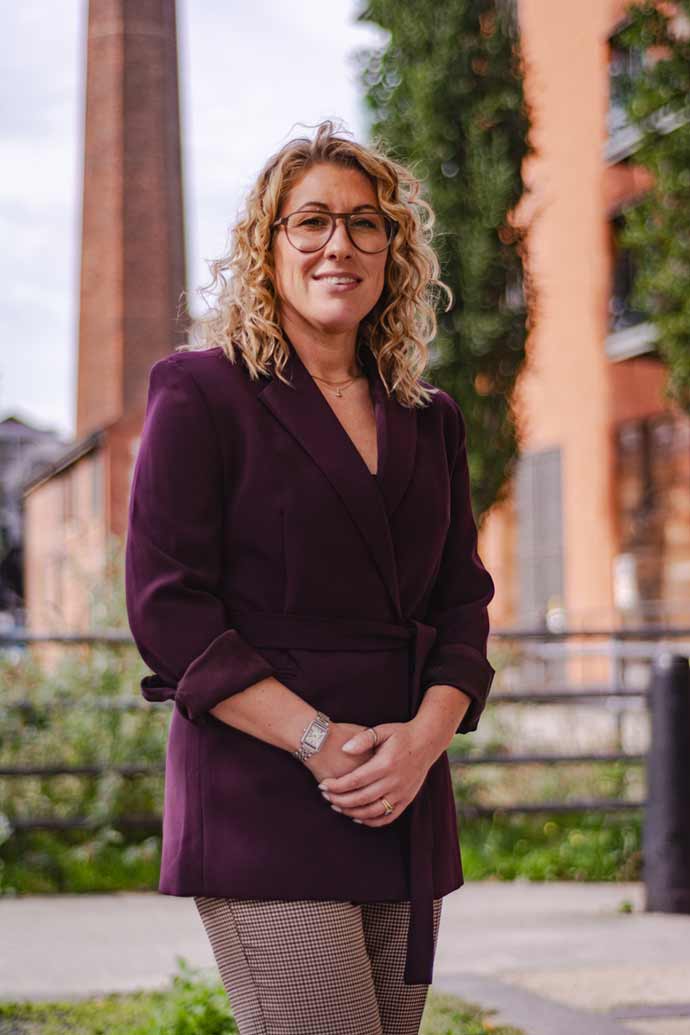
Dr Laura Cartwright has spent 15 years watching sales and marketing teams wrestle with the same problem: plenty of activity and plenty of technology… but not always much idea of what’s actually working. Now, through her business Anchor & Dash, she’s helping businesses join the dots between strategy, systems and sales.
unLTD sat down with Laura to talk AI, the multi-million-pound opportunity she uncovered for one client, why more tech isn’t always the answer, and what on earth a ‘timeshare marketing director’ is.
There’s an age-old tension at the heart of many businesses.

Marketing says it’s generating leads. Sales says they’re rubbish. Marketing wants to know what happened to them. Sales has the answer somewhere in a spreadsheet. Then somebody around the boardroom table asks the killer question: what did we actually get back for the money we spent?
Laura Cartwright has seen versions of that conversation throughout her career.
“I’ve always been in marketing, whether that’s as marketing manager, marketing director or head of marketing,” says Laura, founder of Anchor & Dash. “And the constant challenge you get as a head of marketing is sales telling you that their leads are rubbish.
“‘We haven’t got enough leads’, ‘they’re the wrong people’, there’s this constant backwards and forwards between marketing and sales.
“The challenge is joining that process up so that at the end of the pipeline you can report to the board and say: here’s what we did, here’s what we sold and this is the ROI.”
After around 15 years working in marketing, both in-house and independently, Laura realised that recurring problem was increasingly where her real value lay. Her route into it is an unusual one. She holds a PhD in law and criminology, and that legal training still shows, in a sharp eye for the IP, data and contractual risks that marketing tends to gloss over.
Rather than simply producing more marketing, Anchor & Dash works further upstream, looking at the machinery underneath it: what a business is trying to achieve, the systems it has in place and whether all that activity is actually capable of delivering measurable growth.
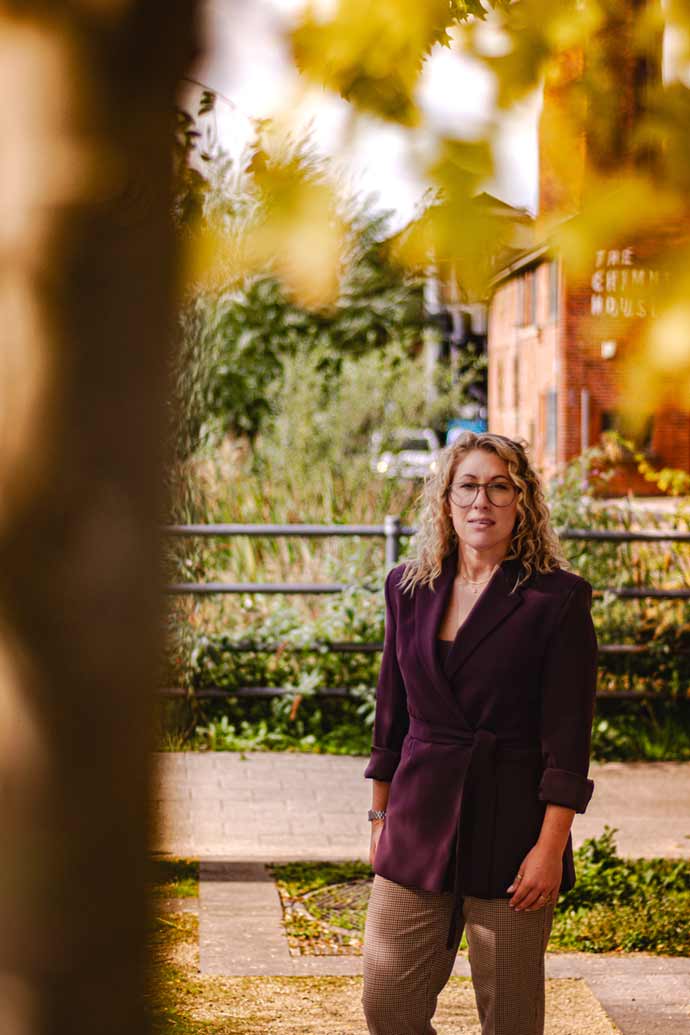
Laura, who recently became a HubSpot Solutions partner, calls it Growth Architecture.
And her approach boils down to three words: strategy, systems, scale.
“Strategy is looking at whether your marketing and sales strategy actually matches your business plan, your ideal customer profile, your products and your pricing,” she says.
“Systems is my favourite part, and the one that makes or breaks everything. Is your CRM talking to your digital marketing? Does it produce accurate reports? Is your website linked up? Can you pull the stats you need and analyse your customer data?
“Or are you working off a salesperson’s spreadsheet that’s sitting in their glove box because they’re field sales?”
Only then comes scale: taking what works and making it repeatable and measurable, so growth is deliberate rather than a run of one-off wins. The channels, PR, print, social media, content, SEO, GEO and advertising, are what gets scaled, not where the thinking happens.
“If you’re scaling something from the top but you don’t know that it’s going to hit a report that directly measures the KPIs you set in your strategy, there’s a problem.”
If that problem has been around for years, AI has thrown something new into the mix.
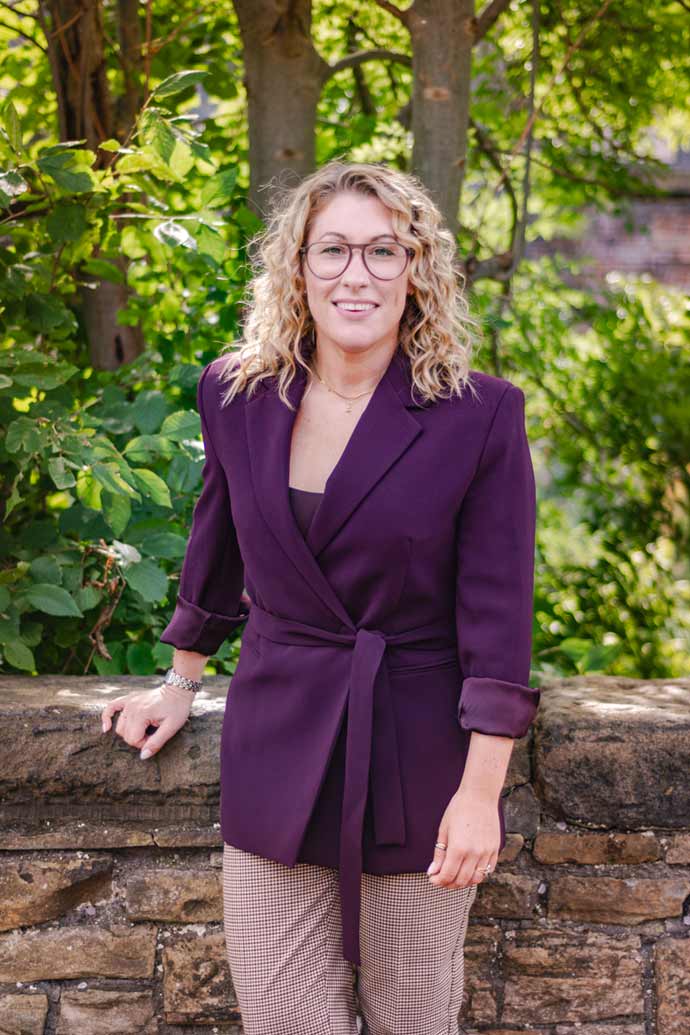
“I think AI tools have sped everything up,” she says. “People have started experimenting and building things that they wouldn’t necessarily have done before because now the resource is there.
“The challenge I’m seeing is that scale has happened rapidly because businesses can implement AI tools to create content, but they haven’t spent the time making sure it talks to their systems.”
Businesses that previously needed significant budgets and specialist expertise can now implement new tools almost overnight, providing somebody is looking at how it all fits together.
“It’s sped up the scale end of the spectrum without linking it back,” says Laura. “Now, one or two years in, you’re looking at all these subscriptions and costs, or leads coming in that you can’t track.
“You can’t report an ROI on it and you don’t know what’s happened to the data.
“It’s like building a house. You can have the whole shell built and say, ‘Okay, I’ve got a house,’ but actually all the plug sockets and light switches are in the wrong place because nobody scoped out the first fix.”
But working extensively with technology doesn’t mean Laura believes every problem needs a technological solution.
She’s already been handed strategies produced using generative AI that look impressive enough, until you ask whether they actually make sense for the business.
“I’ve had people give me ad strategies that simply won’t work because their strategy has been produced by AI.
“It doesn’t know their business. It will quite happily churn something out, but it won’t necessarily tell you what to do with it.
“I’ve had to say, ‘This is an ad strategy. It’s just not yours.’”
Where she does see huge potential is in handing over repetitive work and giving people back something many business owners desperately lack: time to think.
“AI has given a lot of people more headspace to work on strategy and work on the business, which they perhaps didn’t previously have.
“Very small teams, sole traders or one-person businesses would have spent a lot of their time doing the same things every time. Those repeatable tasks can now be automated.
“AI is never going to replace the decision-making process, and I don’t think it ever should. Or creativity. But if you’ve honed a repeatable task, absolutely hand it over.”
Laura practises what she preaches. Anchor & Dash operates leanly, with a collective of specialist freelancers brought into projects when needed and AI handling some of the repeatable work.
“I automate the admin, not the relationship,” she says. “My AI assistant, Rachel, handles the scheduling and the first-line queries. The judgement and the thinking, the reason clients actually hire me, never gets handed to a machine.”
The rest of her time is decidedly more human: running workshops, working within clients’ businesses and then retreating home for the “deep-focus work”, preferably in “absolute silence”.
That time with teams is particularly important when new systems are being introduced.
“People don’t like learning new tech.
“If I go into a sales department and say, ‘You now have to use this CRM,’ they’re not necessarily going to like me. It’s new and they’re busy people.”
So she doesn’t start with the software.
“Before I even introduce any kind of new system, I do a full scoping workshop. What does your day-to-day look like now? What do you hate about it and what do you love about it?
“Then I try to make sure everything they hate gets fixed and everything they love stays or gets better.”
One area where Laura does think businesses should be paying attention to change is search.
SEO has been part of the marketing vocabulary for years. Now comes GEO, generative engine optimisation, and the need to think about how your business is discovered through AI-powered search. Laura believes the basic principle is surprisingly old-fashioned.
“Marketing has always been about answering people’s questions and solving their problems,” she says. “Now they’re just asking in a different place.
“LLMs are reading information in a different way, but the information is still largely the same. I’m currently working with a window company and we recently did a whole campaign on uPVC versus aluminium because that is what people are searching. Those are the questions people have.
“If you ask your staff, ‘What do people ask when they come through the door?’, that’s what you should be answering.”
In many ways, it’s the latest evolution in a marketing landscape Laura has watched change dramatically throughout her career.
“When I first started, I was doing photography, content creation and social media management. At one point I had about 35 clients who wanted Instagram and Facebook, because that was all people knew.
“Then TikTok came in and people realised the value of LinkedIn. Then they realised the importance of personal branding, not just the brand of your business.”
The result has been a seemingly endless conveyor belt of things businesses are told they absolutely must be doing.
“Marketing teams have thought, ‘Now we have to learn TikTok. Now there’s YouTube. Now I need a YouTube person. Now I need video content. Now I need a lead magnet. Are we still doing print?’
“Nobody has had enough time or space to breathe and think: what does that actually do for the business?”
And that’s where Laura believes her own role has changed.
“Somebody will still come to me and say, ‘Can you do our social media?’
“Well, I could. But it’s rarely where I add the most value.
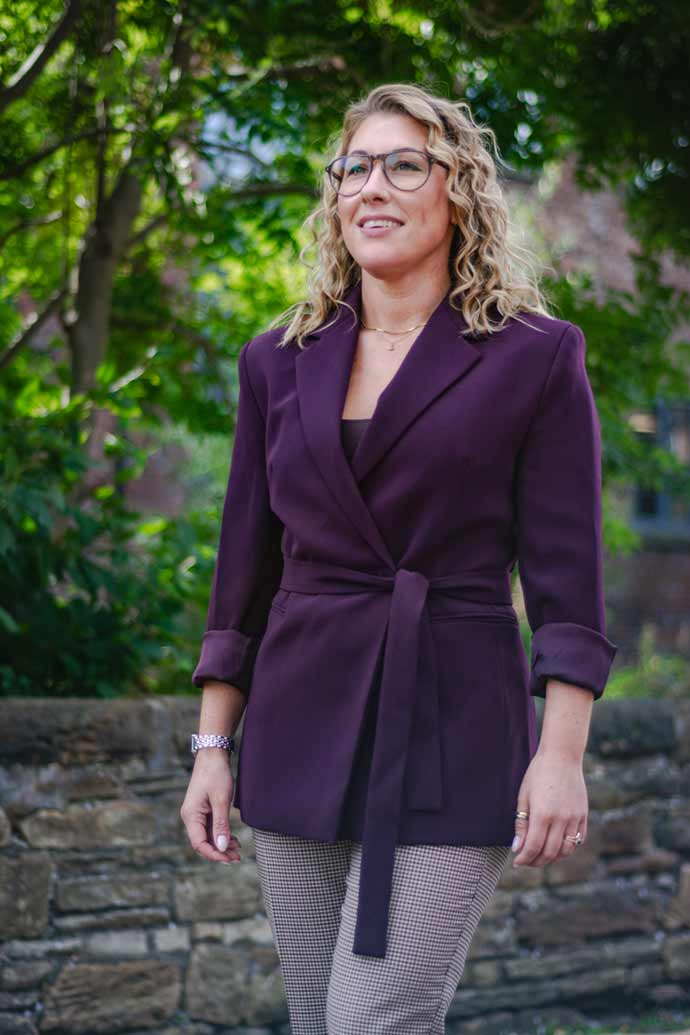
“The best social usually comes from someone in-house, close to the brand and living it every day.
“My strength is seeing the whole picture from the top down and running it as a commercial engine, making sure every channel ties back to strategy, systems and a number the board can measure. That’s a different job from doing the channel work itself.”
For a large company, that overarching view would traditionally sit with a chief marketing officer. Growing businesses often don’t need or can’t justify somebody of that level full-time.
Hence the increasingly ubiquitous phrase fractional CMO, or, if you prefer Laura’s version, a timeshare marketing director.
“Someone said to me that in Barbados they have fractional properties, which are basically timeshares.
“And I thought: that’s exactly it. I’m a timeshare marketing director. You can have me for X amount of days a month.
“It’s actually quite a good way of explaining it.”
And, in an industry increasingly fond of finding complicated names for things, perhaps that’s the best marketing lesson of all.
THE ANCHOR & DASH PROCESS
STRATEGY. SYSTEMS. SCALE.
Laura’s ‘Growth Architecture’ approach looks at three connected areas of a business before deciding what needs to change.
STRATEGY
Does your marketing and sales strategy actually support your wider business plan? Who are you trying to reach? What are you selling, how are you pricing it and what does success look like?
SYSTEMS
Can the technology support that strategy? Your CRM, website, marketing platforms, customer data and reporting should work together so you know where a lead came from, what happened next and whether it ultimately converted.
SCALE
Only then do you scale what works, making growth repeatable and measurable rather than a run of one-off pushes. The channels, social media, content, PR, print, SEO, GEO and advertising, are what gets accelerated once strategy and systems are sound.
Laura will typically begin with an audit across all three areas, identifying where the gaps are before producing a 90-day action plan.
The business can then take that plan away and implement it internally, or bring Anchor & Dash in to deliver it and provide ongoing support.
CASE STUDY:
A MULTI-MILLION-POUND GAP HIDING IN PLAIN SIGHT
So, what does all this actually look like in practice? One of Laura’s current projects provides a pretty striking example.
She’s been working with a large, multi-site organisation made up of several distinct departments.
The company was embarking on a significant digital transformation project when Laura was brought in to support its marketing team through the transition and take a deeper look into its customer data.
“The first thing we did was analyse what their customers were doing, how they were behaving and what their ideal customer profiles were for each different department,” she says.
“And in doing that, we identified a multi-million-pound gap in sales because the departments couldn’t see each other’s data and they weren’t talking to each other.”
Customers might be buying from one department without anybody spotting that they were also a potential customer for another. With different teams and different datasets operating independently, those opportunities were being missed.
A CRM is now being built around the way the company actually works, with a cross-selling strategy designed to allow teams to see relevant opportunities elsewhere in the business.
“Each team will be able to run its own activity but also have oversight of what other departments they can share pipelines and deals with.
“It’s basically about taking a potential client from buying from one department to buying from two or three.”
You can find out more about what Laura's been working on recently and get in touch by heading to anchoranddash.com.


