
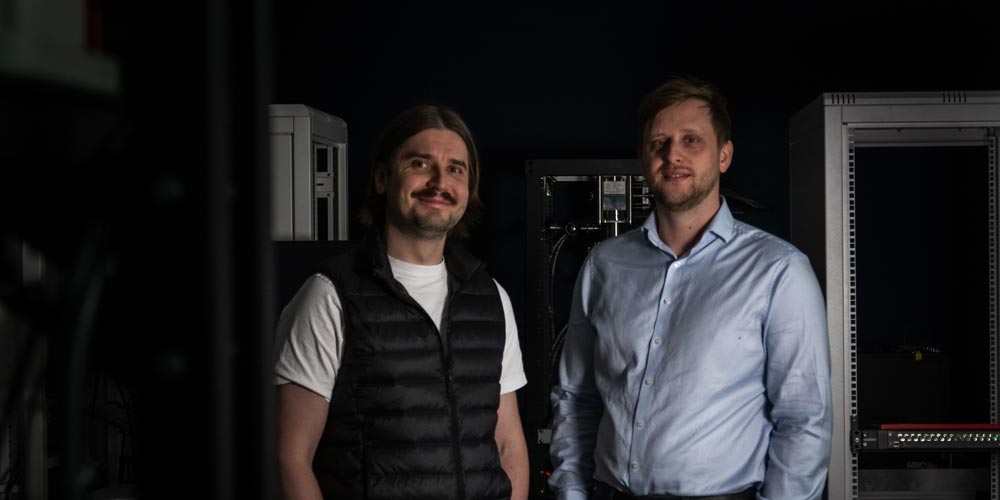
Sheffield-based quantum technology company Aegiq is at the forefront of an emerging technological revolution. Led by CEO and co-founder Dr Maksym Sich, Aegiq is developing quantum computing and communications technologies with the potential to transform various industries ranging from cybersecurity to pharmaceuticals. unLTD went to find out more…
Talk of quantum technologies might bring to mind futuristic sci-fi realms for most people, but quantum computing is very much on its way and touted as the next great leap in computing power.
Unlike traditional digital computers that process information using ‘bits’ (which are either 0 or 1), quantum computers use quantum bits, or qubits, which can exist in multiple states simultaneously. In a nutshell, this allows them to perform calculations at speeds unattainable by today’s most powerful supercomputers.
“A quantum machine can emulate reality to extreme finesse, because our reality is based on quantum physics,” Dr Sich explains to unLTD. “That means it can do much better simulations of things like drug design, catalyst design for energy storage, making more precise, durable materials, or better optimisation and fraud detection for financial institutions such as banks – all much faster and more efficiently than digital computers.”
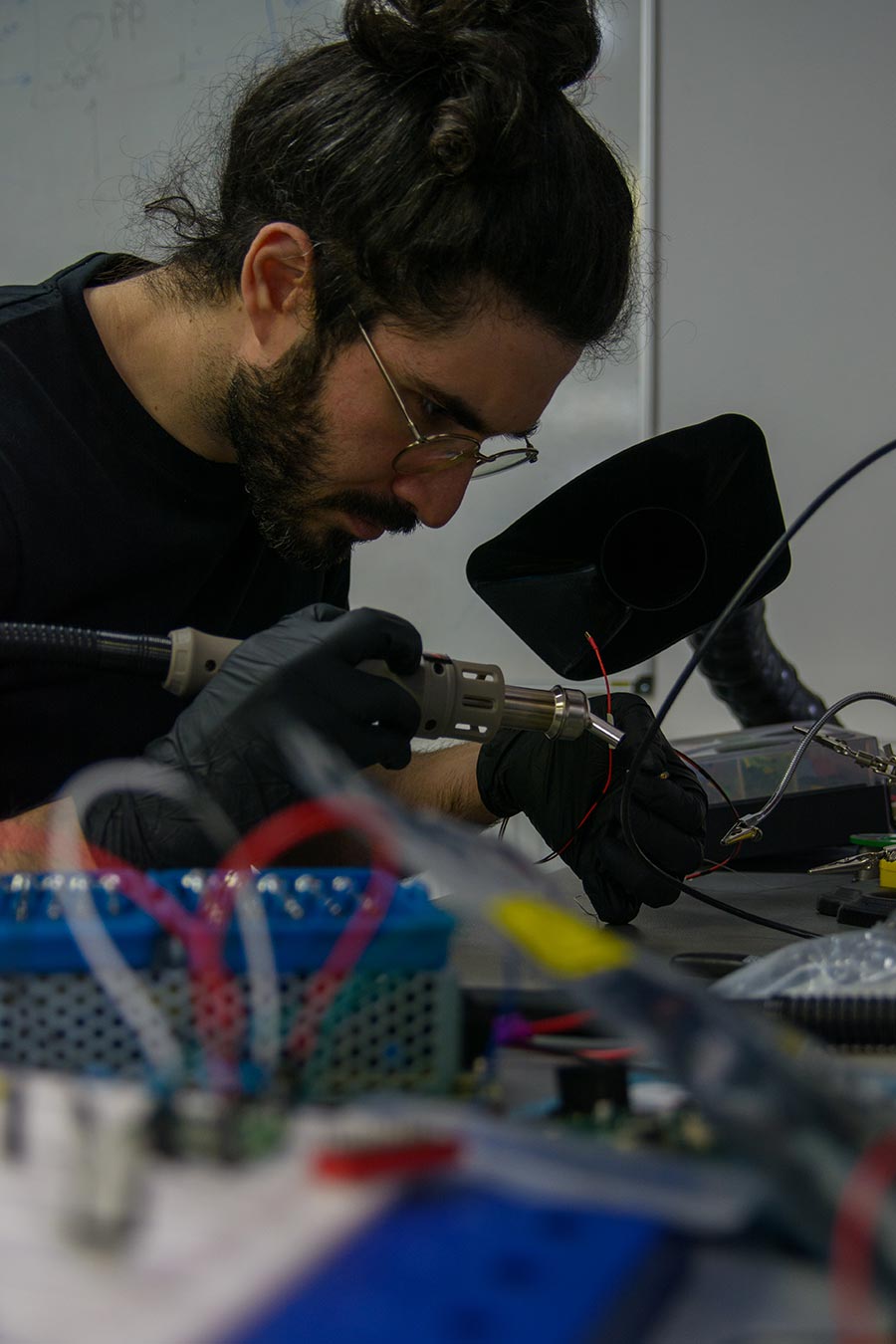
Aegiq’s innovative journey is closely intertwined with Sheffield’s research ecosystem. Dr Sich and the team was part of the UK’s National Quantum Technology Programme – the first of its kind in the world – from its inception in 2013. The University of Sheffield, which has invested heavily in semiconductor photonics research, provided a strong foundation for Aegiq’s work.

Founded in 2019, Aegiq quickly gained recognition for its pioneering approach to quantum photonics – using light particles (photons) as the basis for quantum computing and communications. In 2021, the company set up its base at Sheffield Technology Parks, benefitting from its central location and supportive environment.
“It’s a great space when you’re starting out, with plenty of support” Sich says. “The location is really good, we’re close to the train station. It has a good community and the quality of the building itself is good to maintain the labs for us. It’s the perfect place to jump-start what you’re doing.”
Scaling quantum technology is one of the biggest challenges in the field. Many quantum computers require extreme cooling and complex engineering, making mass production difficult. However, Aegiq’s photonics-based approach offers a more practical path forward: “Our technology is based on conventional semiconductor manufacturing techniques, so we can lean on massive existing manufacturing bases. In addition to that, our unique IP allows us to build devices that are much more efficient and much faster.”
Despite the challenges, the momentum is growing. Aegiq has already been involved in over £30 million in worth of projects and contracts with major industry players, including the UK’s National Quantum Computing Centre, the Ministry of Defence and leading aerospace firms.
One of the near-term areas where quantum technology is set to make in impact is cybersecurity. Dr Sich tells us Aegiq is currently working with British Telecom (BT) to develop quantum-enhanced security for fibre-optic networks, ensuring data remains secure even against future quantum attacks. “Better security for communication cables and critical infrastructure will be one of the earliest real-world applications,” he adds.
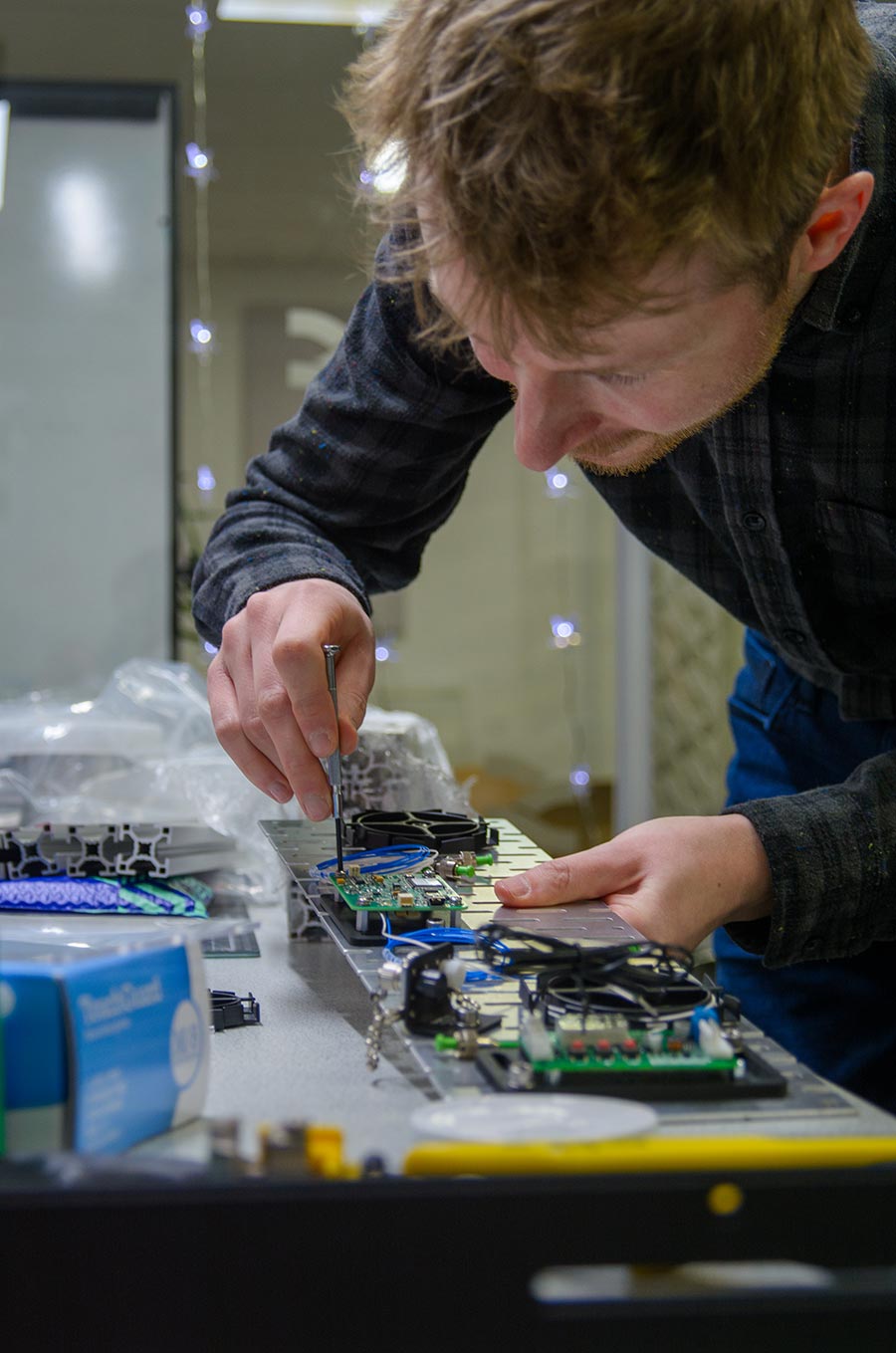
Beyond security, quantum sensors could revolutionise industries such as defence, navigation and environmental monitoring. “Better ability to sense land, sea and undersea environments will have huge implications, from securing vital infrastructure to improving our understanding of climate change,” says Sich.
Looking ahead, Aegiq’s ambitions are clear. Dr Sich explains that within the next five to ten years, the company aims to deliver a quantum computer that surpasses digital equivalents. “The moment we achieve that, we’ll see transformative impacts – cutting drug development times, creating cheaper, more efficient aircraft designs, better batteries, and even improving NHS efficiency are just some possibilities.”
Although quantum computers won’t replace traditional digital systems, they will expand the possibilities of what can be achieved. “It’s not a zero-sum game,” he says. “Quantum computing can complement digital computing, taking it further.”
For the Steel City’s tech ecosystem, Aegiq’s success highlights Sheffield’s potential as a hub for cutting-edge innovation. With quantum technology rapidly advancing, Dr Sich and his team have positioned themselves at the forefront of this revolution – proving that groundbreaking scientific developments can happen right here in South Yorkshire.
“The future of quantum is coming faster than you think,” he concludes. “We are entering a new era of technological advancement. So, tell your kids to start studying or paying attention to it – the fundamental impacts that are coming soon will be profound.


