
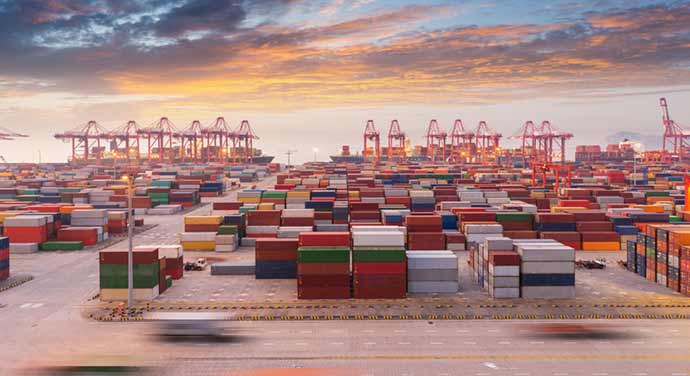
For many South Yorkshire businesses, growth starts close to home. But what if the next stage lies further afield?
Exporting can open up new customers, markets and revenue streams, while making businesses less reliant on demand at home. Yet for an SME that has never traded internationally, it can feel daunting. Where do you start, which markets do you target and, once you’ve secured an overseas customer, how do you get your products there?
Those questions will be on the agenda when the South Yorkshire International Trade Conference returns to Sheffield’s Millennium Gallery on 22 September.
Ahead of the event, unLTD explores what taking that first step really involves. Sheffield International Trade Centre’s Nick Patrick explains where the opportunities lie, Meze Publishing shares its experience of expanding into the US and Sheffield-based International Freight Solutions demystifies the practicalities of getting goods from South Yorkshire to customers around the world.
NICK PATRICK, DIRECTOR, INTERNATIONAL TRADE CENTRE

Why should South Yorkshire businesses export?
South Yorkshire is becoming more internationally traded, but the composition is changing. Services and non-EU trade are growing faster, while traditional goods exports remain important but face a more difficult environment.
Imports are larger than exports, so our region has a net trade deficit. This matters because exports bring new income into the region from outside the UK.
When a South Yorkshire business sells a product or service overseas, it brings external income into the local economy, creating new wealth and supporting higher-value economic activity. If we want to create more wealth in South Yorkshire, we need to help more local businesses develop and expand their international trade.
For a business, exporting expands the available market significantly. The UK has around 1% of the world’s population, so why not show your products or services to the other 99%?
It also reduces dependence on the domestic market, spreads risk and can create economies of scale. Exporting can increase brand recognition, open up opportunities for growth and expose businesses to new customers and international trends.
Seeing what your global competitors are doing can also encourage development and innovation, improve product quality and efficiency, and potentially generate greater profits. And it is fun!
What does the evidence tell us about businesses that export?
Statistics collected over decades show that businesses that export have significant advantages over those that restrict themselves to the UK market.
ONS figures have shown that UK firms exporting goods or services were 28.5% more productive than non-exporters. Firms that both import and export had productivity levels more than 50% higher than non-traders.
In 2025, 24% of goods exporters reported that their export volumes had increased over the previous year, while 26% of service exporters reported an increase.
UK government research has also estimated that exports support nearly 6.5 million UK jobs, with export-supported jobs having median wages around 7% higher than the national median.
Exporting can improve the long-term survival of a business because it provides access to a wider range of customers and reduces dependence on domestic demand. Evidence from the UK Longitudinal Small Business Survey showed that 73% of SME exporters that had exported for at least two years had made overseas sales every year since they began exporting.
Where does South Yorkshire sit today?
One of the more interesting findings is that South Yorkshire’s total international trade increased substantially between 2019 and 2023.
One analysis based on regional trade data puts total international trade at £11.7bn in 2019 and £14.4bn in 2023 – an increase of £2.65bn, or 22.6%.
Manufacturing has traditionally been the backbone of South Yorkshire’s exports. Is that changing?
Manufactured exports are still the backbone, and South Yorkshire has a very strong physical export base in advanced manufacturing, steel and metals, engineering, machinery, specialist manufactured products, aerospace and defence-related manufacturing, food and drink, rail-related manufacturing and specialist technologies.
Historically, the area has had a particularly strong export relationship with Europe. South Yorkshire economic analysis found that four of its five largest goods export markets were EU countries – Germany, Sweden, Ireland and France – with the US the fifth.
South Yorkshire’s economy is moving away from one where international trade is primarily physical manufacturing towards one where knowledge, professional, technical and business services contribute much more.
Financial and business services have increased their international reach, medium and high-knowledge manufacturing remains internationally important, and metals have developed stronger exports to the rest of the world.
Services don’t necessarily require the same physical infrastructure as goods exports. A Sheffield engineering company exporting £10m of machinery and a South Yorkshire software or engineering consultancy exporting £2m of services are very different activities, but the latter can grow much faster and with fewer logistics and regulatory constraints.
Where do you see the biggest opportunities over the next five to 10 years?
The South Yorkshire industries most likely to experience significant export growth include advanced manufacturing, defence and aerospace, clean energy, engineering, digital and technology, and professional services.
India, the US and European markets are among the most promising, but we should also add South America, Asia and the Far East to that mix.
If a business wants to start exporting, what practical support is available?
The three South Yorkshire chambers covering Doncaster, Barnsley and Rotherham, and Sheffield all have international trade departments with experienced staff who can assist companies wanting to sell products or services in global markets.
Sheffield International Trade Centre, which is part of Sheffield Chamber of Commerce, offers additional international trade assistance, including overseas business development using British chamber senior executives on the ground in more than 75 markets.
We can assist with all aspects of trade, including importing, exporting, cross-border customs, duty and VAT payments and special customs authorisations.
Whether you are based in Doncaster, Barnsley, Rotherham or Sheffield, contact your local chamber and they will assist or refer you to the international trade centre.
We also work closely with the South Yorkshire Mayoral Combined Authority and local government to provide practical, hands-on assistance throughout the journey.
What can businesses expect from the South Yorkshire International Trade Conference on 22 September?
This is the fourth South Yorkshire International Trade Conference. This year our focus is on finding new markets overseas and helping companies navigate the routes to reach those markets.
Businesses can come along to the Millennium Gallery in Sheffield and meet the trade teams from their local chambers to find out more.
EXPORTING FOR SMES
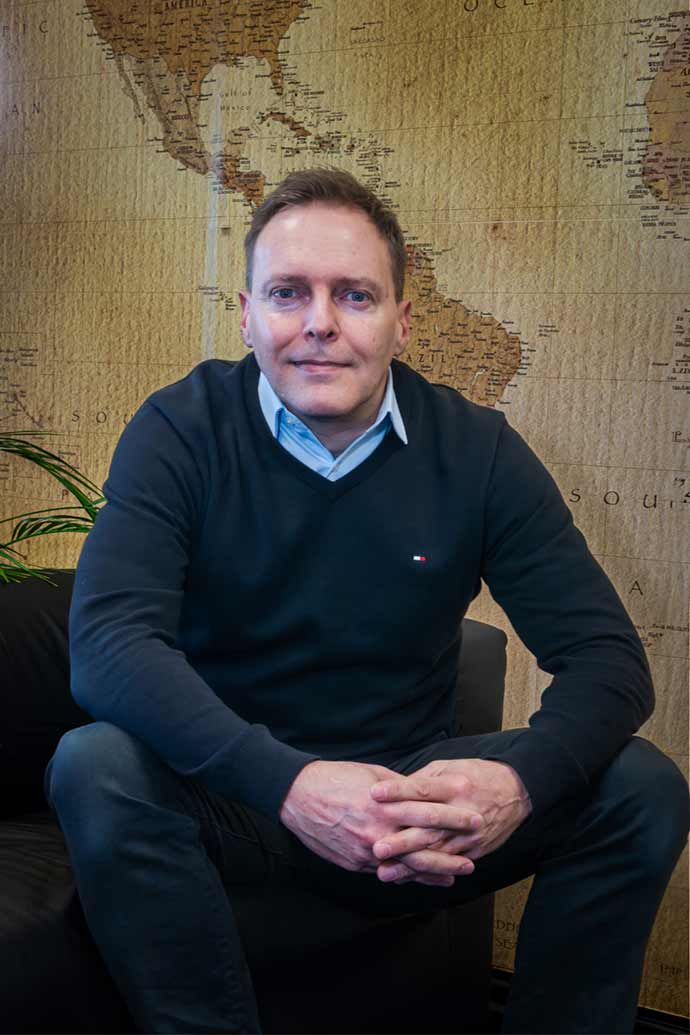
PAUL JOHNSON, Director, International Freight Solutions
How complicated is international shipping for a business doing it for the first time?
It can feel overwhelming, but once you’ve arranged your first shipment, it gets easier. The challenges are well defined and largely avoidable with the right preparation and support, allowing most UK companies to move into regular exporting with minimal disruption.
What information does IFS need from a business before it can advise on the best solution?
The more information you can give us at the outset, the better. We need to understand what you’re shipping, how much of it there is and where it needs to go. That includes things like the number and size of the packages or pallets, their weight and the value of the goods.
We’ll also need to know where we’re collecting from and where the shipment is going, when it will be ready and when it needs to arrive. Then there are any particular requirements to consider – for example, if the goods are fragile, hazardous, temperature-controlled or oversized, or if there are licences, certificates or specific insurance requirements involved.
If Incoterms have already been agreed with the customer, we’ll need those too. Once we have that information, we can look at the different options and advise on the most appropriate and cost-effective way to get the goods where they need to be.
What are the most common mistakes first-time exporters make with shipping?
One is failing to understand the true landed cost. The freight rate is only part of the overall cost, with handling, clearance, duties, insurance, storage and demurrage potentially adding significantly to the final bill.
Small errors or missing details in export documentation are also common causes of delays and cargo being held.
How do businesses decide between air, sea, road and courier?
There are a few things we look at, but it really comes down to what you’re sending, where it’s going, how quickly it needs to get there and what makes sense commercially.
If you’re working to a tight deadline, air freight or a courier service might be the best option, particularly for smaller, lighter shipments. For larger or heavier loads where time isn’t as critical, sea freight is usually more economical, especially if you’re sending enough to fill a container.
Destination obviously plays a big part too. Road freight works well for many European shipments, while longer-distance deliveries will generally go by sea or air, sometimes with a road journey at either end.
Then you have to consider the goods themselves. Perishable, high-value or time-sensitive products might justify the extra cost of air freight, whereas lower-value bulk goods are generally better suited to sea. If something is hazardous, fragile or temperature-controlled, that can narrow down the options as well.
Ultimately, there isn’t one method that’s right for every shipment. It’s about looking at all those factors together and finding the best balance between cost, speed and practicality.
Are there particular countries or markets that are easier places for a first-time exporter to start?
Yes, some markets are easier to get started with than others. Ireland is often a practical first step because it’s close, there’s no language barrier and road and short-sea services are readily available.
Nearby European markets such as the Netherlands, Belgium, Germany and France are also relatively accessible, with short transit times and well-established trade routes, although there are post-Brexit formalities to consider.
Further afield, Canada, Australia and New Zealand benefit from a shared language and familiar business practices, but the distances obviously increase costs and transit times.
The US is a huge market for UK exporters, but the additional distance and complexity can make it one to consider once you’ve built up some experience closer to home.
If I’ve just landed my first overseas order, at what point should I speak to a freight forwarder?
Contact a freight forwarder as soon as the order is confirmed so any issues around classification, licences, costs and timings can be resolved while your options remain open.
Much of the operational work can then be handled for you, freeing you to focus on the customer and preparing the goods. With clear information and early support, the process becomes structured rather than rushed.
How would IFS describe its role in the process?
Our role is to source the most appropriate freight solution for each customer’s requirements. We can arrange import and export shipments ranging from documents and parcels through to pallets, trailers and full container loads, helping customers manage the process from collection through to delivery.
International Freight Solutions (IFS) is a Sheffield-based freight forwarding company providing worldwide import and export services, including air, sea, road, rail and courier freight. To find out more, visit intfreight.co.uk.
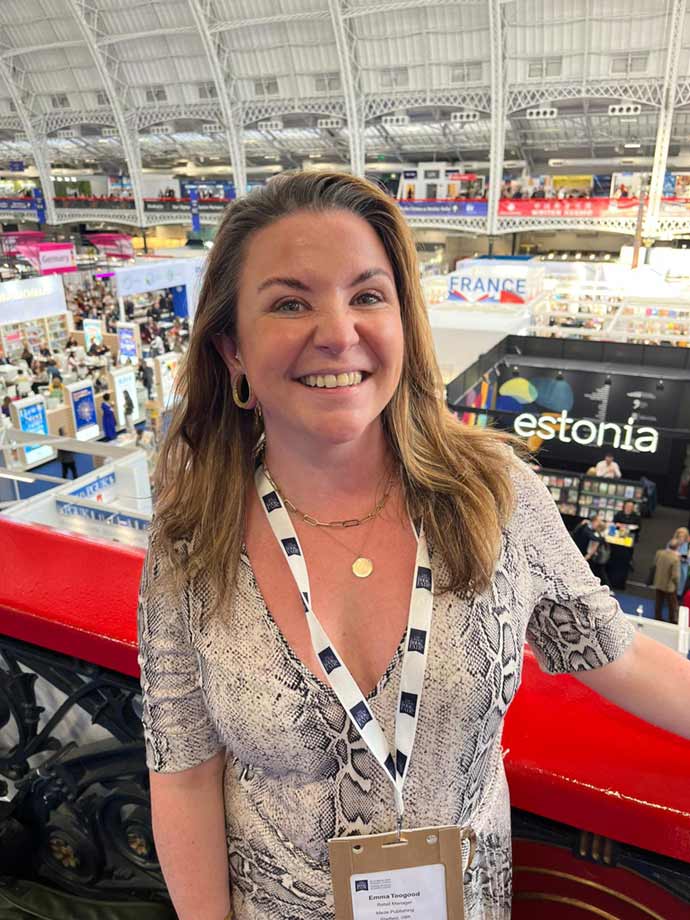
EMMA TOOGOOD, Retail & Publishing Manager, Meze Publishing
What made you decide to look at distributing beyond the UK?
The UK cookbook market is absolutely flooded at the moment, with incredible chefs publishing books across the country. However, from attending different events, we noticed there was growing interest in UK books overseas.
In the US alone, sales of UK books had grown by 41%, and we thought this was something we needed to expand into. We were already doing it to some extent and had people distributing for us in America, but we weren’t handling it primarily ourselves.
We realised we could get more from the market by bringing more of the process in-house and setting up with a different distributor over there.
What did you underestimate about the process?
I completely underestimated how difficult it is to get your products to another country, even when you’re working with a really big business.
We were working with a major publisher in America that also handles distribution, so I thought it would be a piece of cake. They do this day in, day out. But sorting out the logistics was still difficult, from getting pallets out of our warehouse in Sheffield and on to a boat, to keeping track of them and then getting everything through customs.
There are so many different pieces of paperwork to fill out and nobody really sits you down and says: ‘This is how it goes from A to Z.’ You just have to learn by doing.
What do you know now that you wish you’d known before you started?
I wish I’d known the full process from start to finish, particularly what is expected and what’s needed at each stage.
It’s so easy for a shipment to get held up somewhere. If you can’t get a piece of paperwork completed or an invoice sent at the right time, before you know it you’ve been pushed to the back of the queue when it comes to devanning or getting your shipment where it needs to be in the warehouse.
For the last few shipments, we’ve been working with IFS. You send them all the paperwork at the beginning, they talk you through exactly what needs to be done and when, and they effectively project-manage the entire process from start to finish, with regular updates. It makes things so much simpler.
We’ve also found them really competitive, not only for exporting but for importing our printed books, so we now use them for both services. The door-to-door process is much simpler, and they’re a local firm too. We always want to work locally when we can and put that money back into the local economy.
What has exporting done for the business?
It’s been brilliant. We now export to America and work with a wonderful distributor over there, Simon & Schuster, which is huge. Our books are now available on Amazon.com, in Barnes & Noble and Anthropologie, as well as lots of independent bookshops across the US.
For our authors, it means we’re now much more of a one-stop platform when it comes to publishing. Their books can be available worldwide because of the new distribution channels we’ve been able to build.
How has it changed the way you think about the company’s growth potential?
It’s meant we can now reach out to American authors because we feel confident that we can get their books into their local shops, in the same way that I feel confident we can get books from UK authors into Waterstones or an independent bookshop down the street.
Finally, what advice would you give another South Yorkshire SME considering taking its first step into exporting?
There are a lot of things to consider, particularly tariffs, customs charges and the wider logistics. But if you want to grow your business, it’s definitely worth exploring and taking that step. It makes you much more commercially viable when your products are available on different platforms and across the globe.
I’d recommend using a company that offers a door-to-door service, like IFS. As a small business, it has freed up so much of my time because I’m no longer having to constantly chase things and keep track of every stage myself.
Meze Publishing is an independent Sheffield-based publisher specialising in cookbooks. To find out more about its books, authors and publishing services, visit mezepublishing.co.uk.