
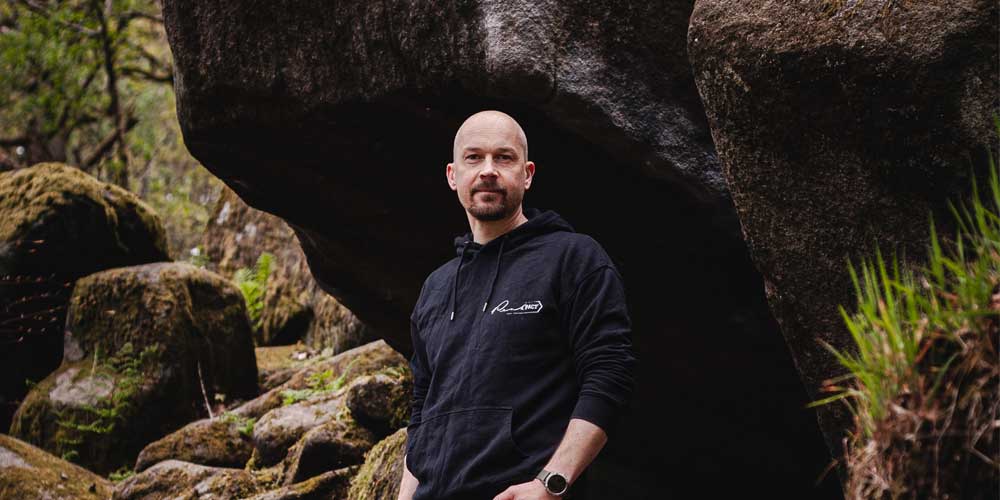
From everyday judgement calls to make-or-break moments, better business outcomes start with better decisions. Peakpact founder Barry Carney shares a practical framework for making them with greater clarity and confidence…
We make hundreds of decisions every day. Business leaders make high-pressure decisions where the impacts can be significant.
It’s the early-stage founder with a sprawling to-do list, competing priorities and a hat for every department, deciding how to give the business its best chance of surviving its first 18 months. It’s the experienced senior leader responding to an unexpected situation while balancing conflicting demands. Or it’s the SME exec team at a fork in the road, deciding how to evolve, sustain momentum and protect the people who built the company.
Because decisions are never made for the sake of deciding. We decide for the outcome.
Decisions are about directing our efforts towards something specific. Decision-making is the journey from uncertainty to clarity, hesitation to commitment and, ultimately, action.


Want better outcomes? Make better decisions.
Better decisions emerge when you improve the conditions for decision-making.
Pay attention to what affects your decision-making and how – things like time constraints, alternative perspectives, emotional support, feedback and even the physical environment. Understanding these influences can help you create the right conditions when an important decision needs to be made.
Whatever those conditions look like, the constant should be that you trust your values and judgement.
Great decisions are the ones you’re confident in – the ones where a good night’s sleep follows. Confident decisions emerge from having strong values. When the circumstances are complex, nuanced or multifaceted, with conflicting or competing needs, it’s often our values that cast the deciding vote.
We strengthen those values by living them – saying them aloud, acting on them and testing them against real choices, again and again.
Of course, the pressures beneath decisions can build quietly in the background before escalating suddenly. At Peakpact, we have a response target specifically for these moments, ensuring we’ll be on a call talking it through together within six hours of you sounding the alarm.
Avoiding those intense situations in the first place is always preferable, so here’s our framework for making better decisions and keeping pressure in check. It comes down to three questions: What am I deciding for? Where am I deciding from? And what’s missing?

1) What am I deciding for?
Before making a decision, you need to understand its purpose. What’s the desired outcome?Try completing this sentence: “Making this decision will…”
What will be achieved, realised, clarified, enabled, stopped, started, avoided, changed or improved?
Business decisions are rarely isolated. More often, they’re one of many in a stack of decisions, all involving trade-offs, competing priorities and a web of interdependencies.
Staying abreast of that broader context is important. When faced with a decision, you need to be able to hold adjacent facts while remaining focused on the ultimate purpose.
When several people share responsibility, does everyone understand the decision in the same way? Different decisions also require different approaches. Sometimes consensus is appropriate; sometimes it isn’t. Some decisions concern specific details, while others operate at a higher strategic level. Some are immediate and high-impact; others are quieter, ongoing and more subtle.
This is where external support can add calm and clarity to the process. Peakpact sessions help define the type of problem being solved, structure priorities, identify the sequence of decisions based on dependencies, draw the ‘enough information to go’ line and clarify the North Star mission that the decision ultimately serves.
2) Where am I deciding from?
What does your decision-making landscape look like? What’s the context and system dynamics – where a change here causes changes there?
It’s essential to understand where you’re setting off from and what’s needed to reach a decision. Planning and preparation are part of that action – an investment in making better decisions.
Understandably, business leaders can be eager to get moving. But in many cases, the best way to move quickly and cover significant ground towards a goal is first to slow down and pay close attention to the here and now.
Too often, hasty decisions usurp quality ones. Businesses skip vital planning and preparation because they mistake them for delays to action. In truth, decision-making can be hard and uncomfortable, which can make shortcuts appear enticing.
Peakpact is here to say: hard is OK.
Hard is where we learn, build strength, deepen relationships, establish trust and earn respect. Facing the necessary hard bits clears the way for robust, well-informed choices. Writing down all the barriers and challenges will help make sense of the realities around your decision, focus your efforts on what matters, and empower you to keep moving forwards.
We need good reasons to lean into challenges when they arise – our values and a sense of responsibility for the people and places around us provide them.
At Peakpact, we help clients understand the terrain they’re facing, protect space for deep thought and calibrate decision-making against their core values.
3) What’s missing?
What are the skills gaps? Are there stakeholders who should be
ncluded? Who or what is at risk of being negatively affected by the decision, and how can that be avoided, mitigated or managed?
What are the known unknowns – the information or data you know you’re missing – and do you actually need to know them? What about the unknown unknowns – genuinely unforeseeable factors or unattainable details – and do you need to factor those in speculatively?
Or perhaps you can confirm that you’re not missing anything. In which case, you’re good to go.
A crucial part of the decision-making journey is recognising when you’re suitably prepared and have a plan that stacks up. Sometimes 40% of the available information is enough to make the call; sometimes you need close to 100%.
The skill lies in recognising when you know enough.
There comes a point where returns diminish and resources are wasted seeking yet more information. This is where we often see analysis paralysis: leaders getting stuck not because the decision is unusually difficult or impossible to make, but because they’re seeking perfection and carrying doubts.

There are plenty of tools and methodologies available to support decision-making, and the right approach depends on the context and objective. Decisions around a potential product launch, for example, could use an innovation framework focused on the feasibility, viability and desirability of the product; or a unique strategic decision might benefit from a custom matrix combined with a series of guided ideation and creative problem-solving workshops at Peakpact, our approaches are designed around the individual and the situation. We’ll often draw on aspects of several different methods to find the right fit.
What we’ve found is that even experienced business leaders tend to make sharper, better decisions once they’ve talked them through with someone who sits slightly outside the situation.
Articulating a problem changes how it’s processed. Being heard and having your thinking reflected back allows both your decision and the rationale behind it to stand up to your own scrutiny.
Inviting challenge, embracing different perspectives and giving yourself permission to explore what the best decision looks like can have hugely positive impacts.
Another component often missing from good decision-making is permission to feel. Emotion, instinct, the gut call, the heart-led response – these are the things that, when acknowledged, can make your shoulders relax and that knot in your stomach disappear.
Don’t dismiss that nagging sense. Give it your attention.
Alongside hard data and information, emotional responses can provide valuable insight. Great decisions balance evidence, experience, instinct and the realities of the situation.
Making better decisions
For better decisions, start with strong values. Add relevant information, supportive conditions and strategic clarity. Ask what you’re deciding for, where you’re deciding from and what’s missing.
Perhaps most importantly, remember that decision-making is a skill. It can be practised, tested and improved.
Different situations will demand different things. For some decisions, experience trumps knowledge. For others, knowledge trumps instinct. And sometimes emotions can defy logic and result in you making the best decisions of your life.
Becoming more deliberate about how you make those decisions gives you a better chance of achieving the outcome you set out to achieve.
Decisions to make? Problems to solve?
Peakpact’s one-to-one sessions provide dedicated time to talk through complex situations, clarify what’s really at stake and make your next move with confidence.
Sessions typically last 90 minutes, providing space to explain your unique situation, work through the details together and bring greater clarity to the decisions you’re facing.
Book a no-obligation conversation at peakpact.co.uk to find out more.