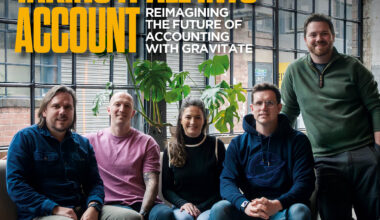

As Employee Ownership Hub Manager within Rotherham Council’s business support team, Izzy is helping to position the borough as the first council in England to actively promote employee ownership as a succession option.
“It’s a really exciting job,” she says. “You have to be creative and innovative, because it’s still quite niche. At the moment, we’ve got eight employee-owned businesses in Rotherham, and it’s about raising awareness and starting conversations.”
The council’s interest in EOTs is rooted in its community wealth building strategy. “When business owners sell, they can easily sell out of the region, to private equity or overseas firms. We want jobs to stay local and wealth to be spread more evenly.”
Andrewes is clear that the council’s role is not to push businesses down a single path. Instead, it aims to remove barriers to information. The flagship offer is a fully funded feasibility service, giving owners access to independent financial advice on employee ownership alongside other exit options.
“The point isn’t to funnel people into EOTs. It’s just to make sure the option is on the table. If you’re curious, you’ve got nothing to lose. There’s no obligation, and you’re not paying for that first advice.”
Support does not stop at the transaction itself. The council has also begun offering ‘EO mindset’ training, helping employees understand what ownership really means. “People don’t instantly think like owners just because the structure changes. That shift can take time and support.”
One of the most persistent misconceptions Andrewes encounters is around control. “People think it means giving away their baby. Actually, it can give you more control over your legacy. You’re part of how the business moves on without you.”
Others confuse EOTs with co-operatives. “They’re very different. These are still profit-focused, well-run businesses. In fact, employee-owned firms are often more productive because people are genuinely bought in.”
Interest is growing, despite recent changes to capital gains tax relief. “We’ve got businesses waiting to start feasibility studies, and nationally the number of employee-owned companies keeps rising year on year. This isn’t a trend limited to one sector either. We’ve seen manufacturers, construction firms, care providers – it really can work for anyone."
Employee ownership:
the timeline
2014 – Employee Ownership Trusts introduced by the UK government
2015–2019 – Steady uptake as awareness grows among SMEs
2020 – EOTs gain attention during Covid as employee-owned firms prove more resilient
2023 – UK passes 1,700 employee-owned businesses
2024 – Numbers exceed 1,800, employing over 330,000 people
Source: Employee Ownership Association; Department for Business and Trade
For more information on transitioning to an EOT, email Izzy.Andrewes@rotherham.gov.uk.