
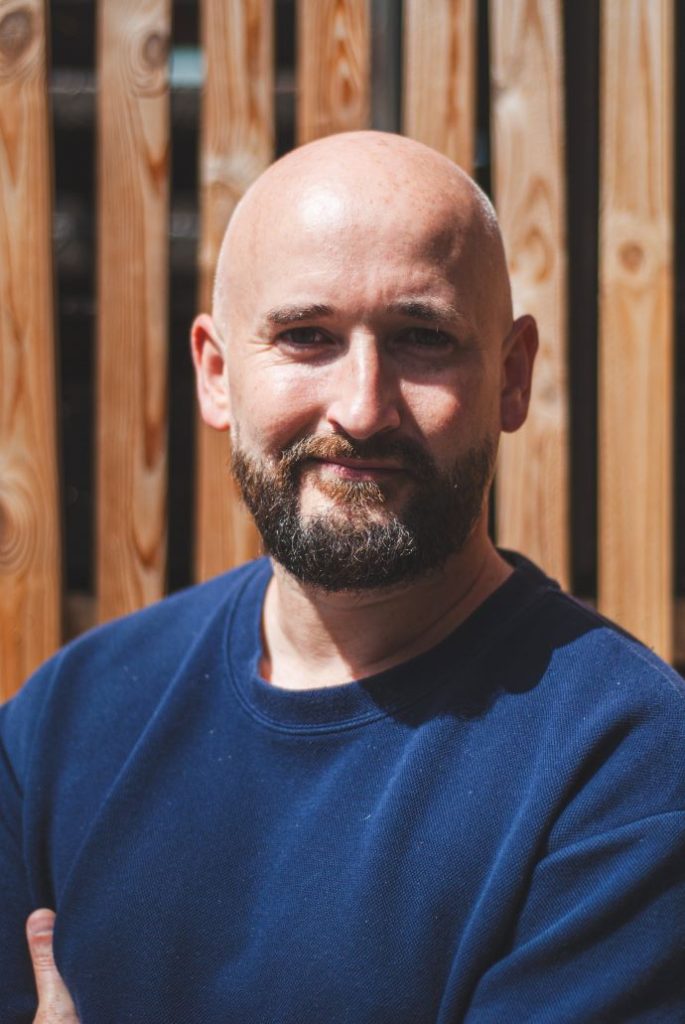
James Coughlan’s route into tech entrepreneurship began with an abandoned plan to become a vet, followed by several years in door-to-door sales before a move into the world of marketing agencies. It might not look like the conventional route for someone building an international flexible working platform from Sheffield, but those experiences have each left their mark on the entrepreneur he is today.
Originally from East London, James went to university intending to study veterinary medicine, only to realise during his first year that the academic path ahead was not really suited to him.
“I’m happy to admit that’s I’m not the most academic and structured studying isn’t my thing,” he says. “My mind goes here, there and everywhere. It runs 200 miles per hour, which is not a great fit for uni.”
What he did know was that running a technology company one day appealed. Rather than spending years studying towards a career he was no longer convinced about, James decided to get out there and begin building skills that might eventually open the right doors. .
His first move was into direct sales, working door-to-door on commission in London. For someone who says he “wouldn’t really say boo to a goose” at the time, it was an effective way of getting over any reluctance to talk to strangers. When your income depends on starting conversations and making sales, confidence becomes less of an optional extra.
James spent three years in the business and built a team of around 40 people across London, before a friend provided the opportunity that would eventually bring him up north. The friend had started a logistics technology company and needed help setting up its sales and marketing operation. With many of its customers based around the M62, A1 and M1, Sheffield offered a useful base in the middle of them, and James moved to the Steel City in 2015.


When the company was later acquired, he moved into marketing agencies, working with businesses in Sheffield and London and adding another set of skills to those learnt in sales. It was during this period, travelling around the country and regularly meeting clients, that the beginnings of his own technology business started to emerge.
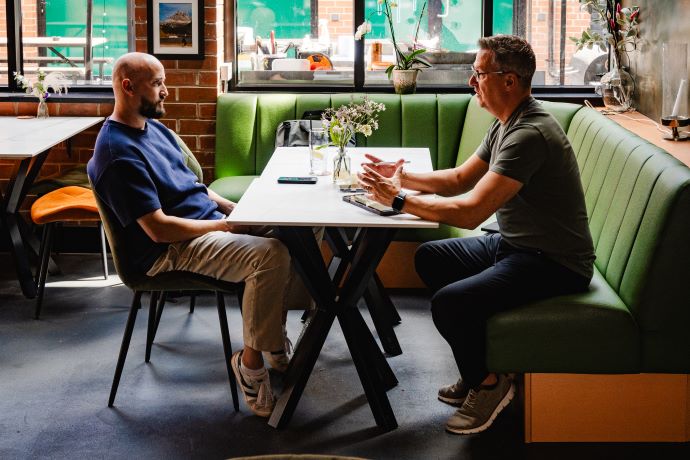
The problem was a fairly everyday one. “I wasn’t a fan of meeting clients in one particularly popular coffee chain, just because it was too noisy and too busy,” he says. “It made me wonder why there was nothing to help people in the same situation find somewhere more suitable to meet a client or open a laptop and get some work done.”
That thought became the basis for the Reef app in 2019, and James began building the platform in January 2020. For a business intending to encourage people into hotels, restaurants and other hospitality venues, the timing proved unfortunate, although the longer-term effect of the pandemic would ultimately make the idea relevant to a much larger audience.
“In the short term it wasn’t great because you wanted to get a platform out there and start monetising it. But looking back long term, it’s been a huge silver lining. It brought millions of people 10 years forward from probably where they would have been with hybrid and remote working and that whole flexibility around work.”
Before Covid, James had largely been thinking about people whose jobs already took them away from a conventional workplace: field sales teams, freelancers, consultants and people travelling between meetings. The sudden experiment in mass homeworking changed that. Millions more people discovered that they could work effectively without being in an office every day, while many also discovered there were limits to how much time they wanted to spend working alone at home.
James was one of them. He had been developing Reef alongside his agency job, with his employer aware of what he was doing, and found the shift to full-time homeworking difficult. “I could do the odd day working from home, but I couldn’t do five days a week. I was just going insane,” he says. “If it helps me, I know it will help other people.”
That experience helped shape his thinking about what Reef could become. The question was no longer simply where somebody could hold a better client meeting. There was a growing group of people who wanted the flexibility of remote work without necessarily wanting their home to become their permanent workplace.
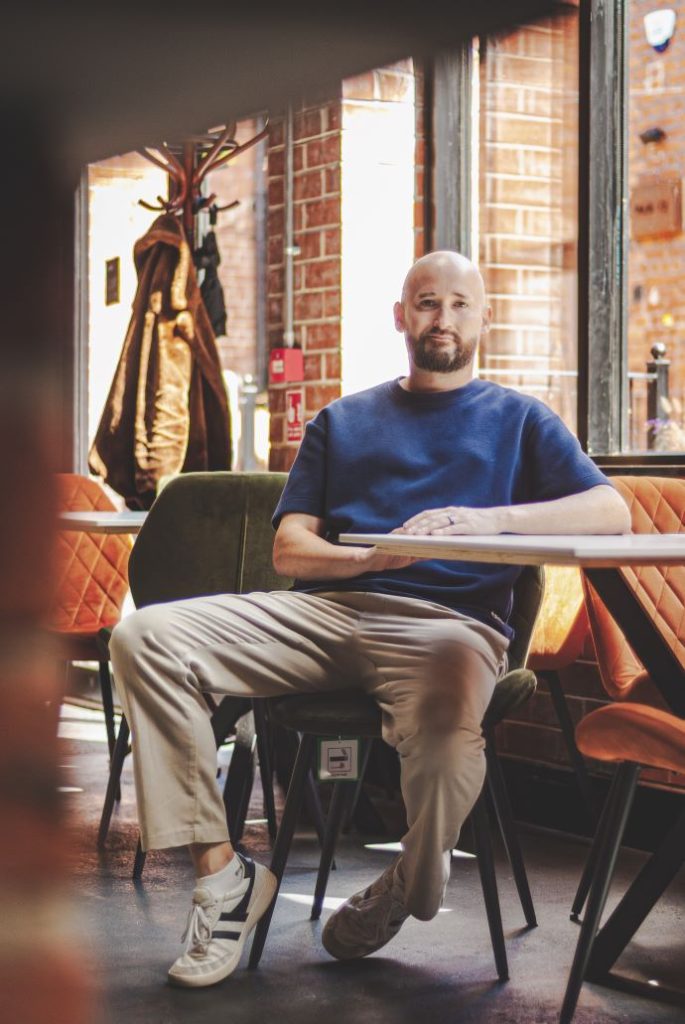
Reef eventually launched in May 2022, before reaching the point where James had to decide whether to continue balancing the business with agency life or commit to it properly. “It came to a point where I had to go full-time on Reef to get it to where it needed to be. You’ve just got to take that leap of faith when you’re doing a start-up.”
Over the following four years, the platform expanded into around 15 countries, including South Africa, Singapore, Thailand, Portugal, the Netherlands and the US. Much of that growth has been driven by demand rather than a rigid international plan. A strong LinkedIn presence brought messages from people asking when Reef would arrive in their country, while James also had connections in several markets who understood the idea and were interested in developing it locally.
“I wouldn’t have had a clue going in some places,” James admits. “We’re bringing more local knowledge when we’re setting up in countries, so we don’t have to make mistakes when we launch in certain places, but they also have contacts on the ground too. Expansion-wise, it’s been a lot quicker and a lot more cost-effective.”
It has also influenced the way James leads the business. As the network has grown, he has become more comfortable giving people responsibility rather than trying to remain involved in every decision. He knows he has recruited people because they understand their particular market or discipline better than he does, so giving them room to use that expertise makes sense.
“I’ve learned to trust a lot more and not be so hands-on,” he says. “The reason I’m bringing people in is because they’re an expert in what they do, so I should let them have the freedom to be that expert and not be a micromanager.”
The experience accumulated since 2022 is now feeding into the biggest change to the business so far. Reef is being rebuilt and relaunched as Settl, with a new identity that James believes better represents what the platform has become.
At its simplest, Settl helps people discover and book places where they can work, meet and collaborate in person. The emphasis is predominantly on hospitality venues, where users can find somewhere to open a laptop and get some work done while also accessing offers such as free coffee, discounted food and drink or packages put together by the venue.
What has changed is James’s view of the role the platform should play around those bookings. Four years of data and feedback have given him a much clearer picture of how people actually use flexible workspace and, crucially, what is missing from the experience.
“We ended up building something that people need rather than what we thought they wanted,” he explains. “Doing that, it became more than just a booking platform. It became more of a community-led piece as well.”
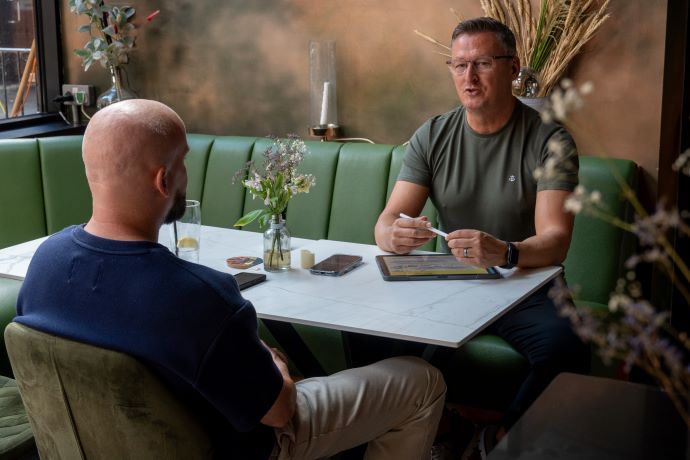
That distinction is important to James because the conversation about flexible working has moved on considerably since the early days of the pandemic. Employers are still wrestling with the balance between office and home, with some pushing for greater attendance and others maintaining hybrid or fully remote arrangements. James thinks the discussion often overlooks another option.
For him, Settl occupies the space between the two. An employee who cannot easily reach the company office does not automatically have to spend the day at home, just as a freelancer who has no office to go to does not have to work alone. Hotels, restaurants and other hospitality spaces can provide a third place where people are around others and still able to work productively.
“There was a report in the US saying isolation and loneliness can take five years off your life, so it’s huge from a mental health and wellbeing point of view,” says James. “There’s all this talk about people collaborating better in person, which is true, but they don’t have to do it from an office. Even when people do go into an office, they might be the only one there, or the only member of their team there, so they’re still missing that interaction. We can mix places up and, because it’s hospitality, it’s always going to be social.”
The rebuilt Settl platform will develop that idea further by allowing people to create their own co-working days,
either for a private network or as public events others can join. James is also talking to existing co-working communities around the UK, with the aim of giving them another route to grow their audiences rather than trying to replace what they already do.
For a founder whose original concern was finding a quieter place for a client meeting, it represents a substantial broadening of the idea, and James sees the rebrand as necessary to signal that change. There was some understandable nervousness around leaving behind a name the business had spent several years establishing, but rebuilding the technology at the same time made the decision easier.
“We have to move away from just being a booking platform, which is what a lot of people thought we were,” he says. “When we were developing the new platform, it just kind of fell into place. It wasn’t really a decision we had to make. It made itself.”
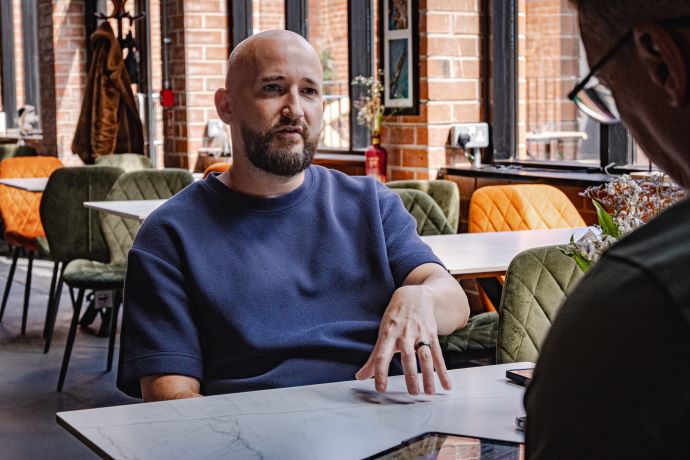
There is also considerably more structure behind the business than there was when Reef first launched. James has concentrated on processes and automation so that entering another country does not mean rebuilding the operation each time. New partners can access the systems they need to begin onboarding venues quickly, while the underlying experience remains consistent across different markets.
Such infrastructure will be tested as Settl looks towards its next phase of international growth. India, Australia and Canada are among the markets in the pipeline, alongside further European expansion, with local people already being lined up to help run them. James hopes to build a UK team too, giving him more time to support those international operations and explore further opportunities.
For all the international ambition, his reasons for wanting the business to succeed are closer to home. James has a young daughter, who has inevitably changed his priorities, while his sister, who has Down’s syndrome, has long been a major source of motivation. He wants to build a business that gives him the freedom to look after the people around him and, in time, use what he has learnt to help other entrepreneurs through the same process.
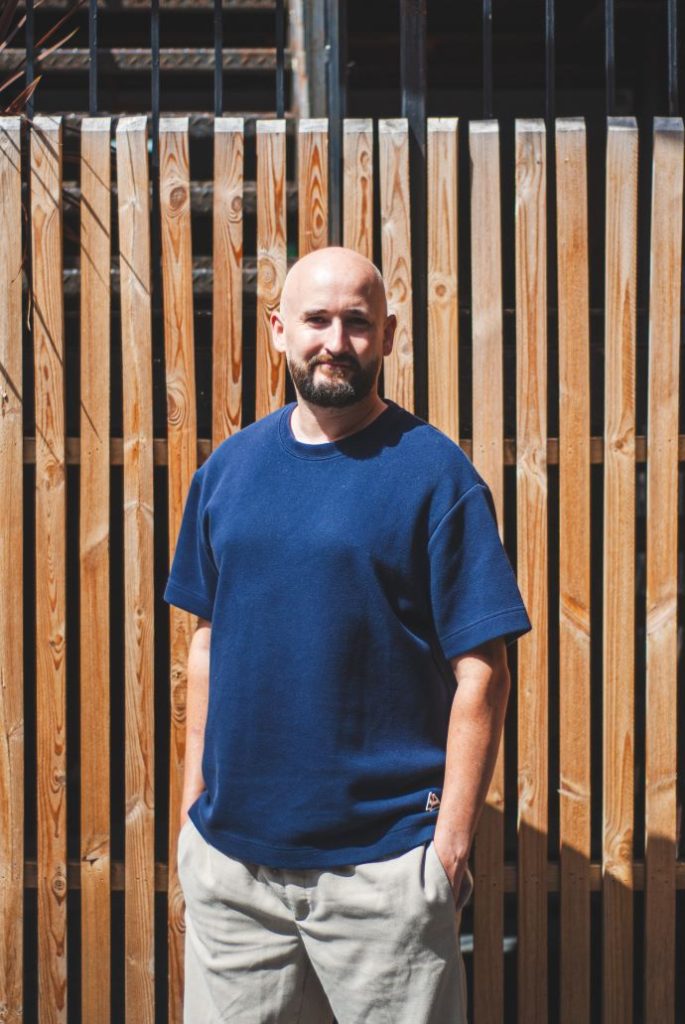
He is open about the difficult parts of going at it alone. Building a start-up has meant watching friends from school move into well-paid careers while he has followed a less financially predictable route, something that previously fed into his own imposter syndrome. He says reducing his social media use has helped, as has reminding himself that comparison is not especially useful when the destination he is working towards is different. “I have to keep bringing myself back to, ‘Well, this is the route I want to go down. This is my own journey, and I’ll get hopefully there in time.’”
And for somebody who has built a business around removing everyday frustrations, James does have one remaining problem he would like solved. Asked what single law he would introduce if everybody had to live by it, he doesn’t choose anything grand about entrepreneurship, work or wellbeing. “Lorries in the outside lane on any road,” he says, “particularly when I’m running late for something.”
Not every problem, it seems, can be solved with an app these days.
You can sign up for a free 14-day Settl trial now at the App Store or Google Play.
James Coughlan’s route into tech entrepreneurship began with an abandoned plan to become a vet, followed by several years in door-to-door sales before a move into the world of marketing agencies. It might not look like the conventional route for someone building an international flexible working platform from Sheffield, but those experiences have each left their mark on the entrepreneur he is today.
Originally from East London, James went to university intending to study veterinary medicine, only to realise during his first year that the academic path ahead was not really suited to him.
“I’m happy to admit that’s I’m not the most academic and structured studying isn’t my thing,” he says. “My mind goes here, there and everywhere. It runs 200 miles per hour, which is not a great fit for uni.”
What he did know was that running a technology company one day appealed. Rather than spending years studying towards a career he was no longer convinced about, James decided to get out there and begin building skills that might eventually open the right doors. .
His first move was into direct sales, working door-to-door on commission in London. For someone who says he “wouldn’t really say boo to a goose” at the time, it was an effective way of getting over any reluctance to talk to strangers. When your income depends on starting conversations and making sales, confidence becomes less of an optional extra.
James spent three years in the business and built a team of around 40 people across London, before a friend provided the opportunity that would eventually bring him up north. The friend had started a logistics technology company and needed help setting up its sales and marketing operation. With many of its customers based around the M62, A1 and M1, Sheffield offered a useful base in the middle of them, and James moved to the Steel City in 2015.
When the company was later acquired, he moved into marketing agencies, working with businesses in Sheffield and London and adding another set of skills to those learnt in sales. It was during this period, travelling around the country and regularly meeting clients, that the beginnings of his own technology business started to emerge.
The problem was a fairly everyday one. “I wasn’t a fan of meeting clients in one particularly popular coffee chain, just because it was too noisy and too busy,” he says. “It made me wonder why there was nothing to help people in the same situation find somewhere more suitable to meet a client or open a laptop and get some work done.”
That thought became the basis for the Reef app in 2019, and James began building the platform in January 2020. For a business intending to encourage people into hotels, restaurants and other hospitality venues, the timing proved unfortunate, although the longer-term effect of the pandemic would ultimately make the idea relevant to a much larger audience.
“In the short term it wasn’t great because you wanted to get a platform out there and start monetising it. But looking back long term, it’s been a huge silver lining. It brought millions of people 10 years forward from probably where they would have been with hybrid and remote working and that whole flexibility around work.”
Before Covid, James had largely been thinking about people whose jobs already took them away from a conventional workplace: field sales teams, freelancers, consultants and people travelling between meetings. The sudden experiment in mass homeworking changed that. Millions more people discovered that they could work effectively without being in an office every day, while many also discovered there were limits to how much time they wanted to spend working alone at home.
James was one of them. He had been developing Reef alongside his agency job, with his employer aware of what he was doing, and found the shift to full-time homeworking difficult. “I could do the odd day working from home, but I couldn’t do five days a week. I was just going insane,” he says. “If it helps me, I know it will help other people.”
That experience helped shape his thinking about what Reef could become. The question was no longer simply where somebody could hold a better client meeting. There was a growing group of people who wanted the flexibility of remote work without necessarily wanting their home to become their permanent workplace.
Reef eventually launched in May 2022, before reaching the point where James had to decide whether to continue balancing the business with agency life or commit to it properly. “It came to a point where I had to go full-time on Reef to get it to where it needed to be. You’ve just got to take that leap of faith when you’re doing a start-up.”
Over the following four years, the platform expanded into around 15 countries, including South Africa, Singapore, Thailand, Portugal, the Netherlands and the US. Much of that growth has been driven by demand rather than a rigid international plan. A strong LinkedIn presence brought messages from people asking when Reef would arrive in their country, while James also had connections in several markets who understood the idea and were interested in developing it locally.
“I wouldn’t have had a clue going in some places,” James admits. “We’re bringing more local knowledge when we’re setting up in countries, so we don’t have to make mistakes when we launch in certain places, but they also have contacts on the ground too. Expansion-wise, it’s been a lot quicker and a lot more cost-effective.”
It has also influenced the way James leads the business. As the network has grown, he has become more comfortable giving people responsibility rather than trying to remain involved in every decision. He knows he has recruited people because they understand their particular market or discipline better than he does, so giving them room to use that expertise makes sense.
“I’ve learned to trust a lot more and not be so hands-on,” he says. “The reason I’m bringing people in is because they’re an expert in what they do, so I should let them have the freedom to be that expert and not be a micromanager.”
The experience accumulated since 2022 is now feeding into the biggest change to the business so far. Reef is being rebuilt and relaunched as Settl, with a new identity that James believes better represents what the platform has become.
At its simplest, Settl helps people discover and book places where they can work, meet and collaborate in person. The emphasis is predominantly on hospitality venues, where users can find somewhere to open a laptop and get some work done while also accessing offers such as free coffee, discounted food and drink or packages put together by the venue.
What has changed is James’s view of the role the platform should play around those bookings. Four years of data and feedback have given him a much clearer picture of how people actually use flexible workspace and, crucially, what is missing from the experience.
“We ended up building something that people need rather than what we thought they wanted,” he explains. “Doing that, it became more than just a booking platform. It became more of a community-led piece as well.”
That distinction is important to James because the conversation about flexible working has moved on considerably since the early days of the pandemic. Employers are still wrestling with the balance between office and home, with some pushing for greater attendance and others maintaining hybrid or fully remote arrangements. James thinks the discussion often overlooks another option.
For him, Settl occupies the space between the two. An employee who cannot easily reach the company office does not automatically have to spend the day at home, just as a freelancer who has no office to go to does not have to work alone. Hotels, restaurants and other hospitality spaces can provide a third place where people are around others and still able to work productively.
“There was a report in the US saying isolation and loneliness can take five years off your life, so it’s huge from a mental health and wellbeing point of view,” says James. “There’s all this talk about people collaborating better in person, which is true, but they don’t have to do it from an office. Even when people do go into an office, they might be the only one there, or the only member of their team there, so they’re still missing that interaction. We can mix places up and, because it’s hospitality, it’s always going to be social.”
The rebuilt Settl platform will develop that idea further by allowing people to create their own co-working days,
either for a private network or as public events others can join. James is also talking to existing co-working communities around the UK, with the aim of giving them another route to grow their audiences rather than trying to replace what they already do.
For a founder whose original concern was finding a quieter place for a client meeting, it represents a substantial broadening of the idea, and James sees the rebrand as necessary to signal that change. There was some understandable nervousness around leaving behind a name the business had spent several years establishing, but rebuilding the technology at the same time made the decision easier.
“We have to move away from just being a booking platform, which is what a lot of people thought we were,” he says. “When we were developing the new platform, it just kind of fell into place. It wasn’t really a decision we had to make. It made itself.”
There is also considerably more structure behind the business than there was when Reef first launched. James has concentrated on processes and automation so that entering another country does not mean rebuilding the operation each time. New partners can access the systems they need to begin onboarding venues quickly, while the underlying experience remains consistent across different markets.
Such infrastructure will be tested as Settl looks towards its next phase of international growth. India, Australia and Canada are among the markets in the pipeline, alongside further European expansion, with local people already being lined up to help run them. James hopes to build a UK team too, giving him more time to support those international operations and explore further opportunities.
For all the international ambition, his reasons for wanting the business to succeed are closer to home. James has a young daughter, who has inevitably changed his priorities, while his sister, who has Down’s syndrome, has long been a major source of motivation. He wants to build a business that gives him the freedom to look after the people around him and, in time, use what he has learnt to help other entrepreneurs through the same process.
He is open about the difficult parts of going at it alone. Building a start-up has meant watching friends from school move into well-paid careers while he has followed a less financially predictable route, something that previously fed into his own imposter syndrome. He says reducing his social media use has helped, as has reminding himself that comparison is not especially useful when the destination he is working towards is different. “I have to keep bringing myself back to, ‘Well, this is the route I want to go down. This is my own journey, and I’ll get hopefully there in time.’”
And for somebody who has built a business around removing everyday frustrations, James does have one remaining problem he would like solved. Asked what single law he would introduce if everybody had to live by it, he doesn’t choose anything grand about entrepreneurship, work or wellbeing. “Lorries in the outside lane on any road,” he says, “particularly when I’m running late for something.”
Not every problem, it seems, can be solved with an app these days.
You can sign up for a free 14-day Settl trial now at the App Store or Google Play.