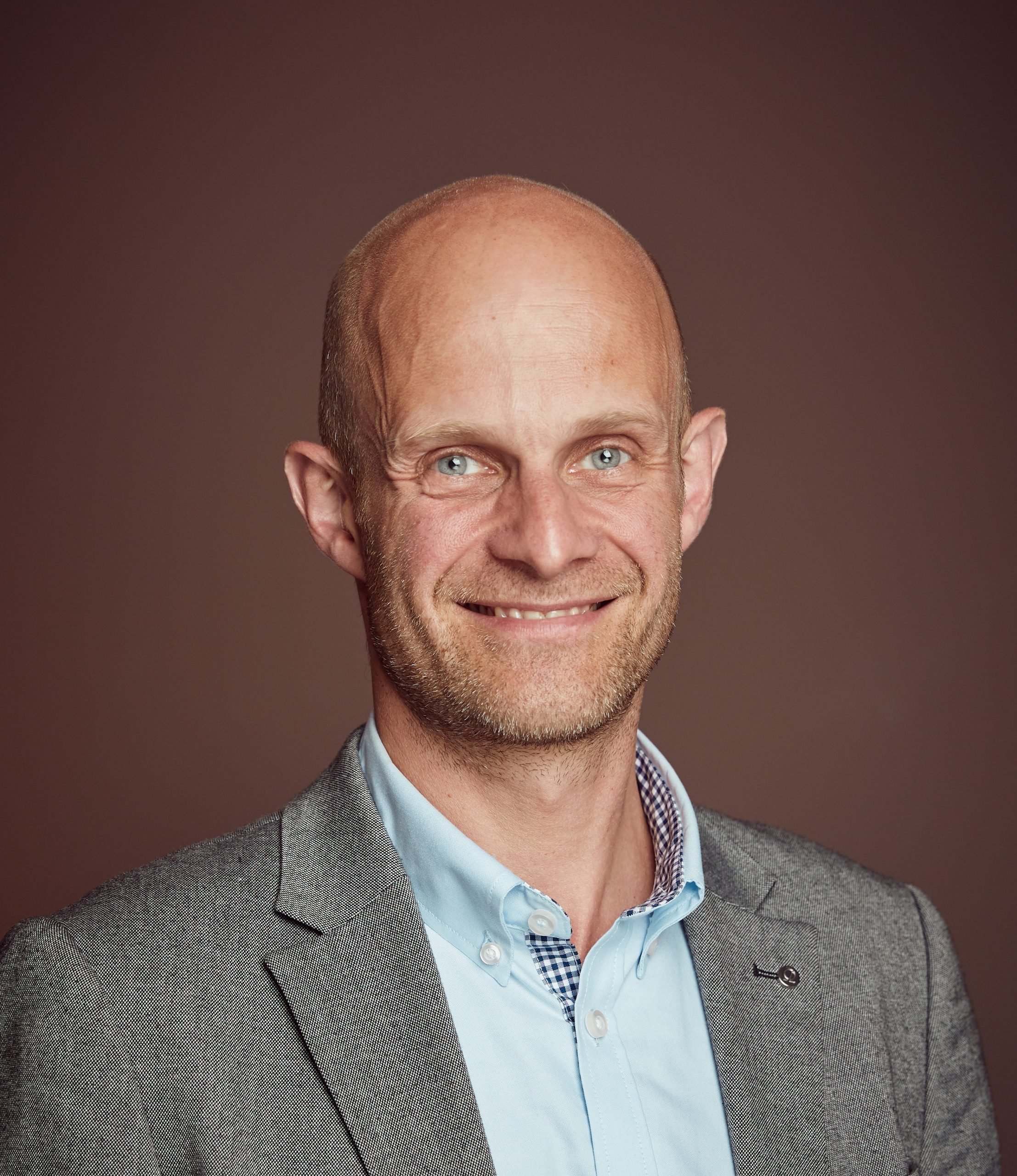
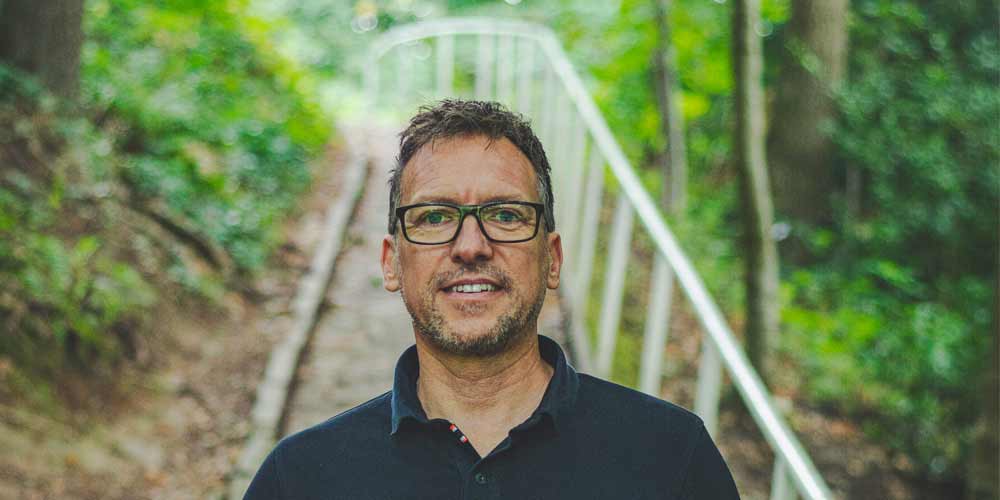
For the latest Inside Track, Russ Thompson sits down with MB Wills & Estates founder Marc Broadhurst to find out how an unlikely route into estate planning became a business he genuinely cares about, and why there’s far more to writing a will than getting the paperwork right.
If you had told Marc Broadhurst’s teachers at High Storrs School that, 35 years later, he would be running his own estate planning business, sitting down with families to discuss some of the most important decisions they will ever make, he suspects the news might have raised a few eyebrows. “I think there’d have been some funny looks and some giggles,” he says. “I wasn’t a scholar at all. I found school very difficult. I couldn’t concentrate, I was the class clown, a bit of a joker. I had no aims really for what I was going to do when I left school.”
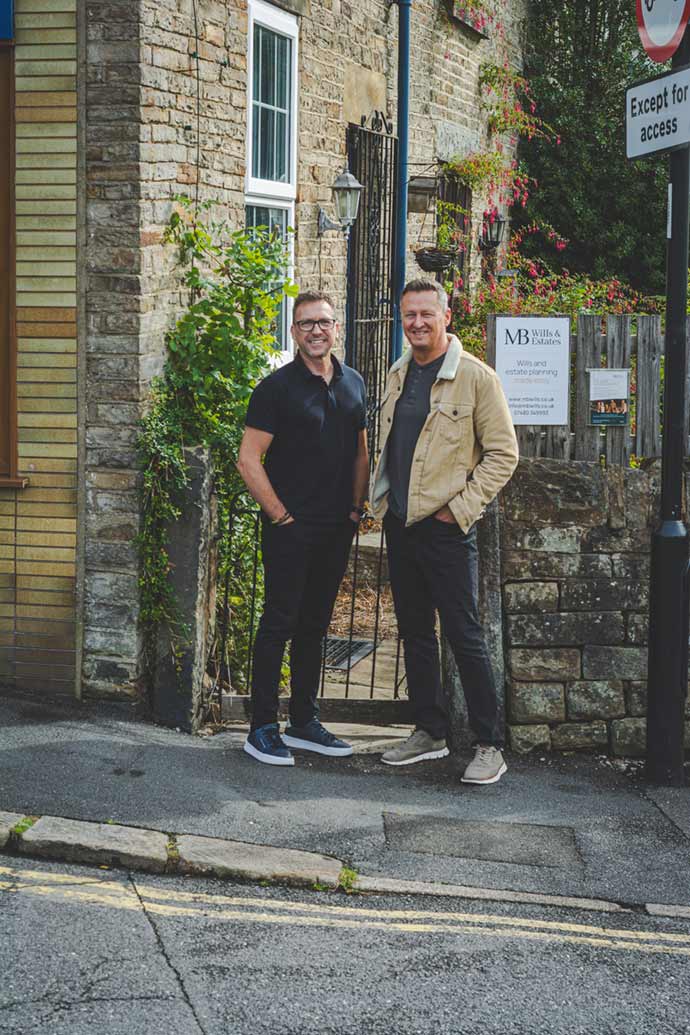
He left with one GCSE and, by his own admission, was simply glad to be out. There was no carefully mapped career plan or long-held ambition to become an entrepreneur, and certainly no teenage fascination with wills and estate planning. What followed instead was a working life that has taken in food production, driving instruction, lingerie retail in Spain and, perhaps most memorably, a spell travelling the country selling sausage skins. It is not the obvious route into estate planning, but very little about his career has followed the obvious route. “I never knew what I wanted to do until probably the past eight or 10 years. Now I’m finally happy with what I’m doing.”
Today, as founder of MB Wills & Estates, he helps people plan for death, illness and later life, subjects that most of us would rather push towards the bottom of the to-do list. His route to the business has been varied, but spend time talking to him and a connecting thread begins to appear. Much of his working life has involved sitting down with people, gaining their trust and learning what is really going on beneath the surface.
His first move after school was into the food industry, following something of a family tradition. His grandfather and great-grandfather had both worked in the trade, with his great-grandfather once owning three shops in Sheffield. “I literally didn’t know what else I wanted to do. I just thought, well, I’ve got to do something.” He worked his way into management but soon realised it was not for him. What the experience did clarify was that he wanted more control over his own working life.
That led him to retrain as a driving instructor. “I think that was when I first realised I wanted to work for myself. I wanted the autonomy.” He ran his own driving school for around five years and thoroughly enjoyed it, but looking back he can also see that the role taught him skills he still uses today. “You’re sat with somebody for an hour or two hours, week after week, and you pretty much become friends. You learn a lot about the people you’re teaching and they learn a lot about you. Quite often they open up about what’s happening in their lives as well.”
Learning to drive can be stressful, so part of the job was about creating an environment in which people could relax and build confidence. Somewhere between manoeuvres and roundabouts, the conversation would often become surprisingly personal. “In a way, you become a confidant. Some of the driving lessons felt almost like therapy sessions.”
There is a connection with the work he does now. Estate planning can be uncomfortable and emotional, and while learning to drive is hardly comparable in subject matter, both situations place him alongside somebody who may be nervous or uncertain and needs reassurance as well as technical guidance. “Different people deal with things in different ways. You’ve got to be able to adapt to the person in front of you.”
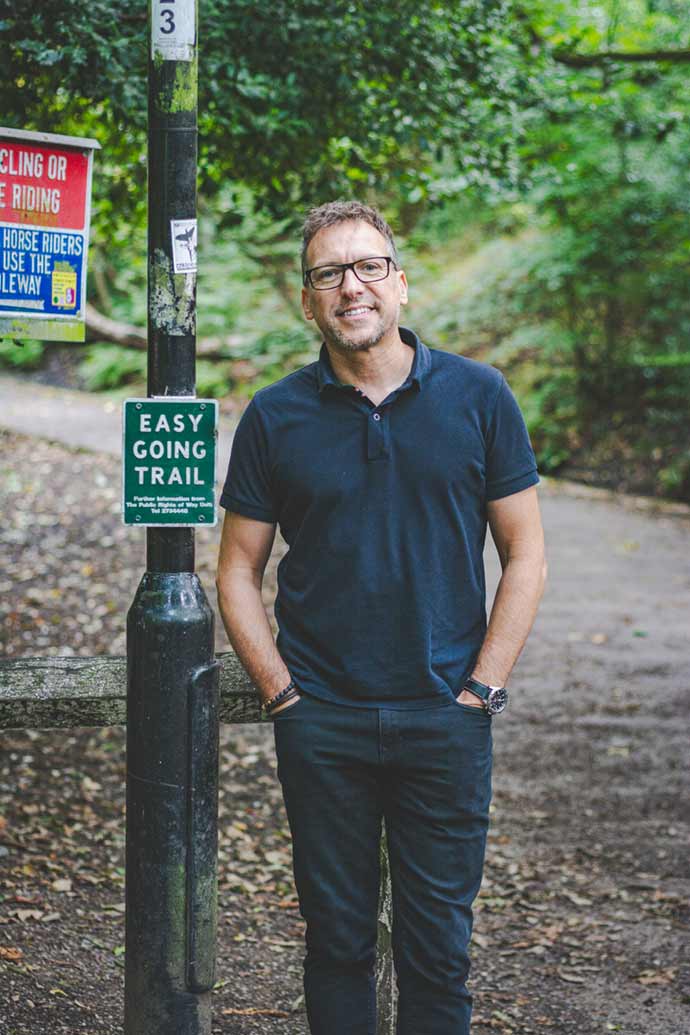
The next major change came when he and his wife acted on something they had talked about for years: living abroad. Their eldest son was around 18 months old and they felt the opportunity would narrow once he started school, so they sold up and moved to Spain. “I’m very much one that, if you’re going to do something, get on and do it,” he says. “Don’t settle for the sake of it. If there’s an itch that needs scratching, go and do it. What’s the worst that can happen?”
They arrived without jobs or much of a business plan. When an opportunity arose to take on a lingerie shop, they decided to give it a go. “We basically ended up selling bras and knickers to expats,” Marc laughs. “When I think back now, it just sounds ridiculous but it was a way to earn a living.”
Life in Spain was not quite the endless sunshine fantasy sometimes attached to moving abroad. They were a young family building a new life without an established support network, in a country where they did not speak the language fluently, while learning how to run a business as they went along. “It was difficult, I’m not going to lie. We literally went to nothing. We didn’t have jobs when we went and we didn’t know what we were going to do.”
The local expat community helped, and they soon found other young families facing similar challenges. “You tend to seek each other out. It happens naturally. Quite quickly we got a good network of friends and people who were in the same situation as us, young families trying to make ends meet. You learn off each other.”
Spain also reinforced something that has cropped up throughout his working life: he is not particularly interested in staying somewhere simply because it feels familiar. “I don’t like to sit still,” he says. “I get bored. You can probably tell that from my employment journey. If I’m doing something and I don’t like it, it’s not right and it’s not working, why carry on?”
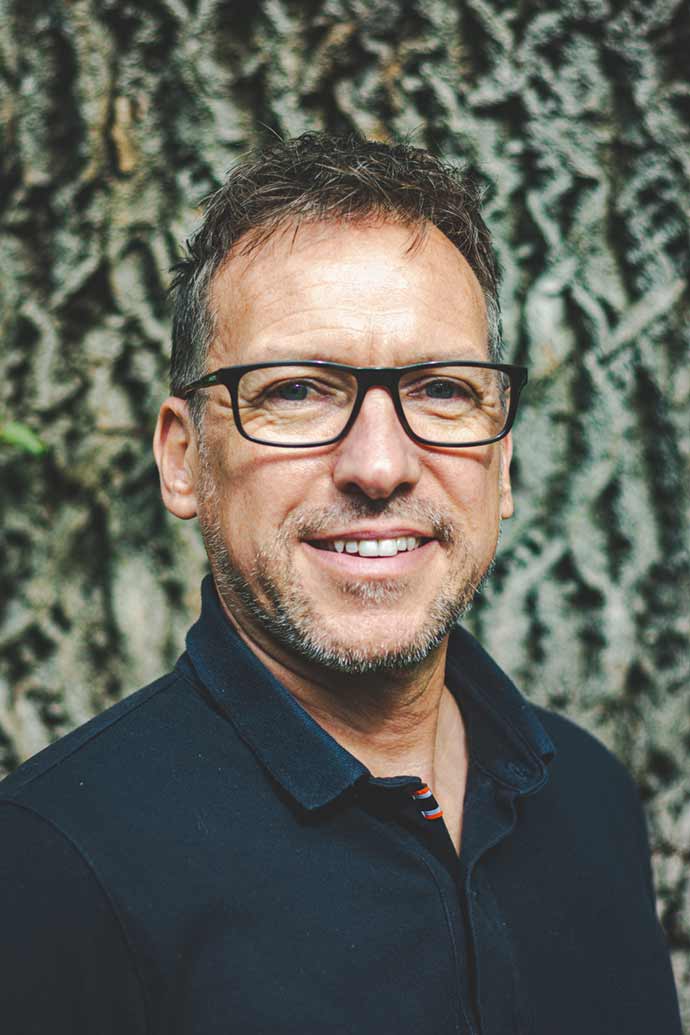
After two years, the family returned to Sheffield. As an only child, he wanted his son to spend more time with his grandparents, while the family support network had become increasingly important. Their son had also experienced difficulties at school in Spain which would later take on greater significance. There were less profound reasons too. “I was a little bit homesick,” Marc admits. “I missed going to the pub on a Sunday afternoon. Sunday dinners. We’d done it, we’d ticked that box, and it was time to come back and get on with the next part of life.”
Back in the UK, he returned to the food industry, initially with a previous employer and later in sales. It was during this period that he landed one of the more unusual entries on his CV. “I was an account manager for a sausage skin company. I travelled the country selling sausage skins to factories and farm shops. Not many people can say they’ve done that role.”
The biggest turning point in his working life, however, came through family circumstances. His eldest son was diagnosed as autistic at the age of seven. Before the diagnosis, he and his wife were receiving near-daily calls from school because something had happened and one of them needed to leave work. “It doesn’t matter how understanding your employer is, you can only leave work early for so long,” he says. “It became almost inevitable that I’d have to become self-employed so I could be there to support my son, drop what I was doing and go and pick him up if I needed to.”
Having already worked for himself as a driving instructor, self-employment was not entirely unfamiliar, although this time the decision was driven by necessity. A friend who worked as an independent financial adviser was training people to become life insurance advisers, so Marc retrained and began working on a self-employed basis in 2014. From there, the move into will writing and estate planning happened naturally.
What began as a practical way to create flexibility around family life became the career he had spent years unknowingly looking for.
“I’ve kind of fallen into it. I never intended to be an estate planner. But I’m here and I absolutely love it. It almost feels like I was meant to be.”
For somebody whose business deals so closely with death and loss, “love” may sound like a strange choice of word, and he is well aware of the contradiction. “It’s not a sexy job. But it’s such an important job.” The satisfaction comes from knowing that a conversation held today could make life easier for a family many years in the future. “When I’ve finished with a client and produced those documents and they’re all signed off, I know it could be 20 or 30 years before that document comes out again. But I know that, at that point, it’s going to make that family’s life that little bit better at a very difficult time.”
His own experiences have inevitably shaped the way he approaches the job. Marc lost his father to cancer 13 years ago, while his mother later developed dementia, giving him first-hand knowledge of the pressures families can face. “I’ve been through it. I know what these things bring. Everybody deals with it differently, but I can use some of those experiences when I’m talking to clients.”
That empathy matters because estate planning conversations can move quickly into areas people rarely discuss, even with those closest to them. “One of the first questions I ask people is, ‘Why do you want to write a will? Why am I here today?’ Usually they’ll say they’ve been meaning to do it for ages. But normally something has triggered that call. Maybe they’ve had a family incident, somebody close to them has died or they’ve had a diagnosis.”
He believes the reluctance to talk openly about death and later life is one reason these conversations can carry so much weight once they finally happen. “We don’t talk enough in this country about death and dying, or becoming ill in old age. When people do get an opportunity to talk about it, I think there is a release there.” What clients often feel afterwards, he says, is relief. “The thing I hear most is, ‘I’m really pleased we’ve done that.’ They get peace of mind.”
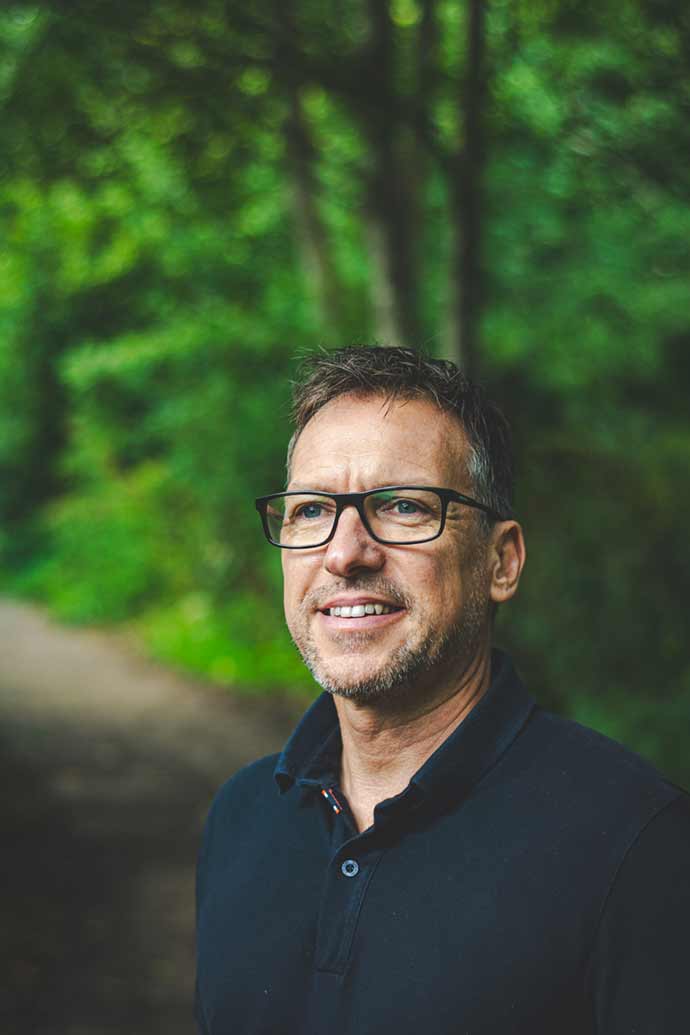
Despite running his own company, Marc still does not particularly identify with the classic image of the entrepreneur. “I’m not a natural business owner. I’ve stumbled into it over time.” That makes the community around his business particularly important. He is a regular at networking events and is part of Sheffield Business Runners, while sport provides a useful counterbalance to the emotional weight of his work.
“Life is stressful and business is stressful. Doing stuff for myself is massively important. Anything that takes me away from the stresses of life, lets me recharge and reset, is important.” The network matters professionally too. Like many sole traders, he may run a one-person company, but he does not see himself as operating alone. “I’ve built up a trusted team of people around me who I can bounce ideas off and chat to about business. Sometimes it’s good to speak to people outside your business as well, just to get a different perspective.”
After a career marked by change, MB Wills & Estates is different. This is the role he intends to stick with, even if his wider attitude to change remains as open as ever. “Change is inevitable,” he says. “It’s always going to happen in life and in business. If you don’t change, you’re standing still. You might not always like it, but I think it’s important to adapt to it.”
At the end of every Inside Track interview, it’s the same closing question: if you could create one law or rule that everybody had to live by, what would it be? Marc asks if he can have two, both of which he has passed on to his children. The first is characteristically straightforward: “Don’t be a knobhead.” The second is rather more practical: “When you leave the house, always make sure you smell nice.”
There wasn’t much of a career plan when Marc left school 35 years ago, and the years since have brought more than their fair share of changes in direction. But the different jobs, businesses and personal experiences have all helped shape the way he works today. In MB Wills & Estates, he has landed on something that makes good use of the skills he has picked up along the way – particularly his ability to listen and put people at ease – while doing work that can make a genuine difference to families when it matters.