
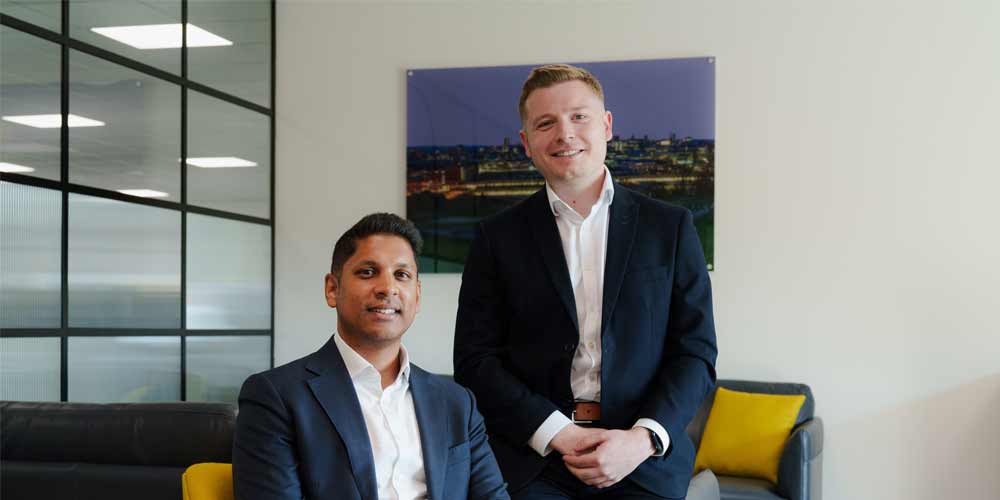
After building their careers within some of the sector’s larger organisations, Fintrel co-founders Luke Worthy and Ketan Patel had a clear idea of the kind of financial planning firm they wanted to work for. So they built it. Last month, unLTD visited the company’s Sheffield headquarters to find out why independence, employee ownership and old-fashioned relationships sit at the heart of a distinctly modern business.
Happily, there’s a coffee menu waiting for unLTD on arrival at Fintrel’s impressive Sheffield HQ. And it’s not a stick-the-kettle-on Kenco job, either, but the kind of selection that means, if you’re gagging for a pre-meeting latte macchiato, this is a financial planning firm that has you covered.
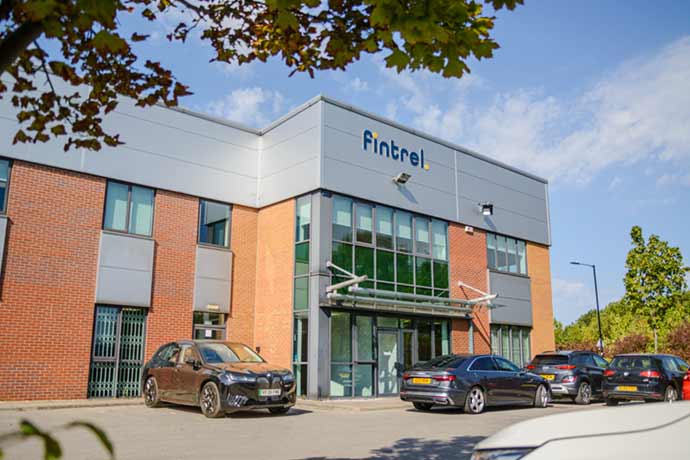
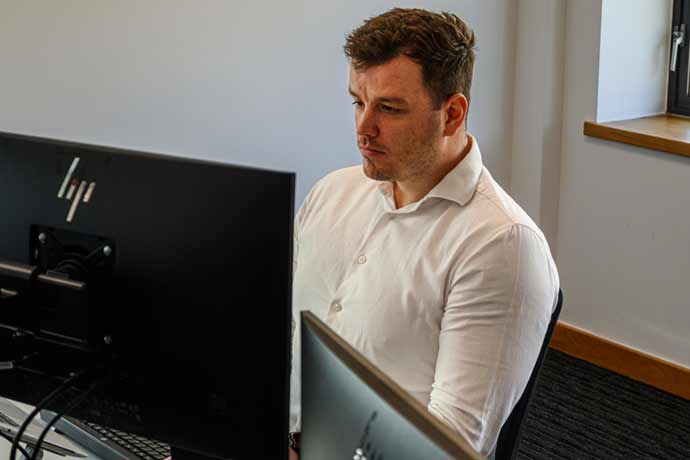
Beyond reception, their large, modern offices at Broadfield Business Park continue in much the same vein. There are glass-fronted meeting rooms, privacy pods, breakout stations and open-plan spaces designed to give the firm’s growing team somewhere they want to work – and, just as importantly, a place where clients will be happy to visit.
It all feels quite contemporary. Which makes it interesting that, when co-founders Luke Worthy and Ketan Patel join and start explaining the story behind Fintrel, they keep coming back to something altogether more old-fashioned.
Because while they have created a distinctly modern financial planning business, neither is particularly interested in presenting themselves as quirky disruptors of their industry. In fact, strip away the tech, infrastructure and sleek surroundings and their ambition is proudly traditional.
“I don’t know whether I’d call it disruption,” Ketan says. “In some ways we’re trying to get back to something quite traditional: know your clients exceptionally well, give them genuinely independent advice, charge them fairly and look after them for decades.”
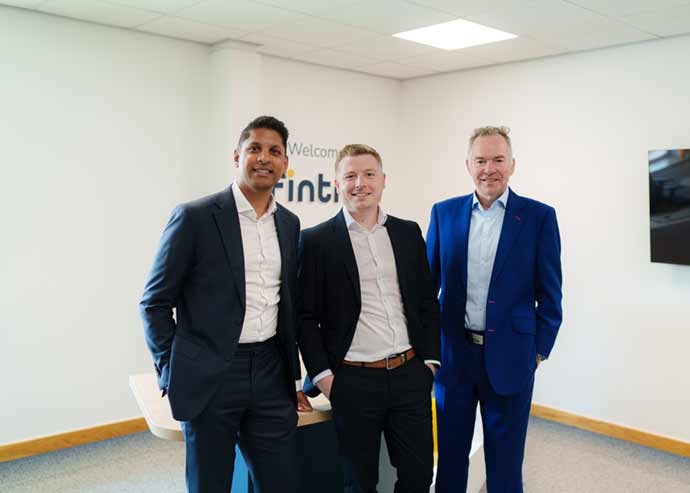
That philosophy is at the centre of the business Ketan, Luke and fellow co-founder and chairman Charlie Gillespie have created. All three are chartered financial planners, and the firm is built around a trio of principles that emerged from their combined experience in the sector: independence, employee ownership and long-term client relationships.
These “non-negotiables”, as Luke calls them, are the product of people who spent years learning their trades inside established financial organisations, saw the considerable strengths of those businesses but also developed their own ideas about how they wanted to work in the process.
“We started it because we had a very clear idea of the financial planning firm we wanted to work for, and the firm we’d want our own families to be clients of,” Luke says. “We wanted genuinely independent advice, we wanted greater control over pricing, we wanted advisers closer to the decisions that affect their clients, and we wanted the people creating the value in the business to participate in that value.”
Luke came into financial planning from a legal background, having completed an LLB in Law at the University of Sheffield. He had secured a training contract, but as financial services entered a period of significant change, he saw an opportunity to take a different path.
The Retail Distribution Review was driving higher professional standards across financial advice, while Luke was also attracted by the opportunity to build long-term relationships with clients and have a more direct impact on their lives. He has since completed an MBA at the University of Cambridge.
“The sector has taken these huge leaps forward over the last two decades,” he says. “People inside the sector now see the service alongside accountancy and legal advice. It’s right up there in terms of professionalism, service standards and regulation.”
Ketan, who holds a BSc in Economics from UCL and an MSc in Finance and Financial Law from the University of London, joined Lloyds Bank’s graduate programme before moving into private banking, where he spent around five and a half years. From there he joined international multi-family office Stonehage Fleming in London, advising wealthy families and becoming increasingly involved in complex and intergenerational financial planning. He later spent around five years with a national IFA.
Across banking, the family office environment and a national financial advice business, he was able to see different versions of the profession from the inside.“I’ve only done this,” Ketan says. “It’s the only thing I’ve ever done for the last 13 years. I think it was about taking the expertise, training and experience of working for those firms to shape what we wanted going forward for clients.”
Integral to that was the type of model they wanted to spend the next phase of their careers working within. As consolidation has accelerated across financial services, the pair felt increasingly drawn towards a structure in which advisers could remain close to both clients and the decisions affecting them.

In their minds, that can only be properly achieved with independence.
Without getting too technical, financial advice firms can broadly operate on either an independent or restricted basis. In a restricted model, advisers may have limits on the providers or products they can recommend. In larger integrated organisations, different elements of the financial services chain, from advice to investment management and platforms, can also sit under the same ownership.
“Independence isn’t just a badge,” Luke states. “It’s the freedom to start every decision with one question: what is right for this client and this client’s situation? We didn’t want the answer to that client’s question to be constrained by our ownership structure or our commercial priorities.”
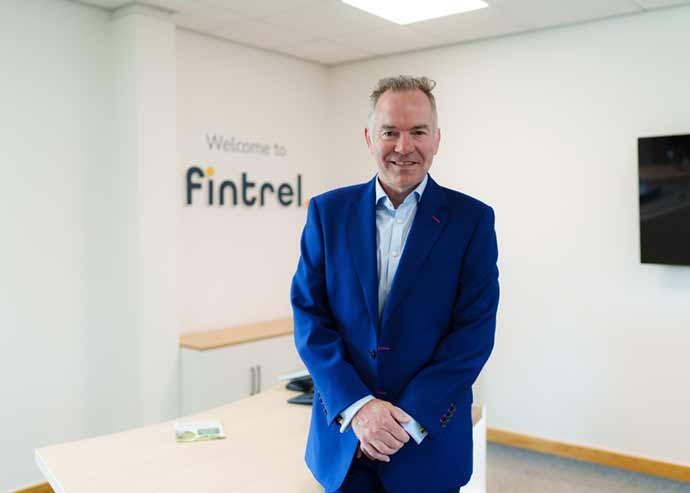
He describes the different elements of Fintrel’s proposition as “interchangeable parts”. If circumstances change or one provider is no longer the right fit, the firm has the freedom to consider alternatives rather than being tied to an in-house proposition.
Ketan explains the key principle is a straightforward one: “There’s no conflict of interest.”
The second cornerstone of Fintrel’s structure is perhaps less immediately visible to a client walking through the door, but the founders believe it could prove just as important over the coming decades.
The firm is employee-owned through an Enterprise Management Incentive scheme, with members of the team holding ordinary shares in the business and benefiting directly from the value they help to create. Luke succinctly refers to it as “the antidote to short-termism”.
“We advise clients to think in decades,” he adds. “Sometimes we sit with families and plan out their financial plan for many years into the future, so we thought we needed an ownership structure that also thinks in decades.
“Staff have ordinary shares and they’ll directly benefit from the growth that they help to create. There are no daft hurdles or targets. If the business grows in value, they rightly benefit from it.
“The whole point really is that the incentive to focus entirely on client care is aligned with the whole business.”
An emphasis on the long term carries through to the day-to-day running of the business.
“When we make decisions, we’re not making them based on what might affect the P&L next year,” Ketan says. “We’re thinking, actually, this might be the right decision because we’re going to have this office for however many years.
“We’re generally thinking: what’s the best thing for the business long term?”

That ownership model feeds directly into how they approach the workplace culture at Fintrel.
Luke describes the business as deliberately “management light”. Rather than building layers of hierarchy, the intention is to recruit confident, experienced people, give them the infrastructure and support they need, then trust them to do their jobs.
“If you get the right people in, and as long as people know that they’ve got the support structure in place, they know where they need to go for help and they’ve got the toolkit they need, it’s very much a culture of personal responsibility,” he says. “Work from where you want to work from, as long as the job gets done.”
There is also a sound commercial logic behind handing employees a stake in the company.
“If you create business owners in a business, it turns out everyone cares a bit more about what they do. It’s kind of human nature and common sense, really.”
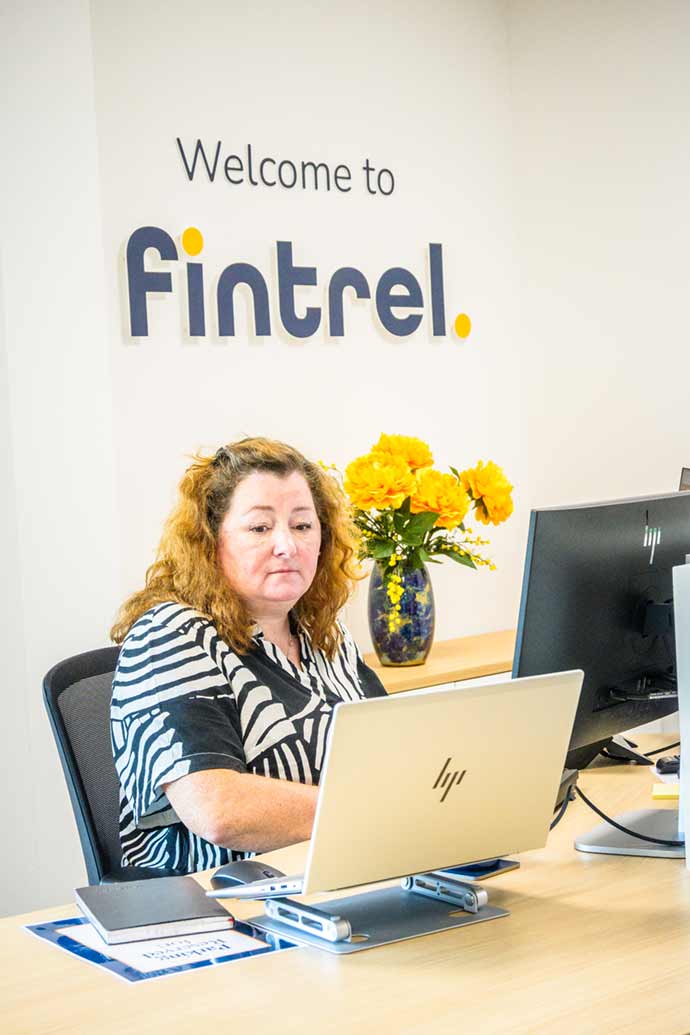
The proposition appears to have struck a chord. Fintrel began trading around November last year, after the founders spent months putting the company’s infrastructure and regulatory foundations in place, and has since grown to a team of 34.
But Luke is keen to reverse the usual language around that expansion, claiming that an increased headcount is not the main story and “growth has been the evidence rather than the objective.”
Ketan says some of the most satisfying early feedback has come from colleagues already talking about Fintrel as somewhere they can imagine spending the remainder of their careers.
“And that’s a really nice thing to aim for,” he adds. “Our jobs and responsibilities are obviously to make sure that happens.”
The founders are clearly learning too. Both are happy to admit that moving from financial planning into building and running a growing company has brought a new set of challenges.
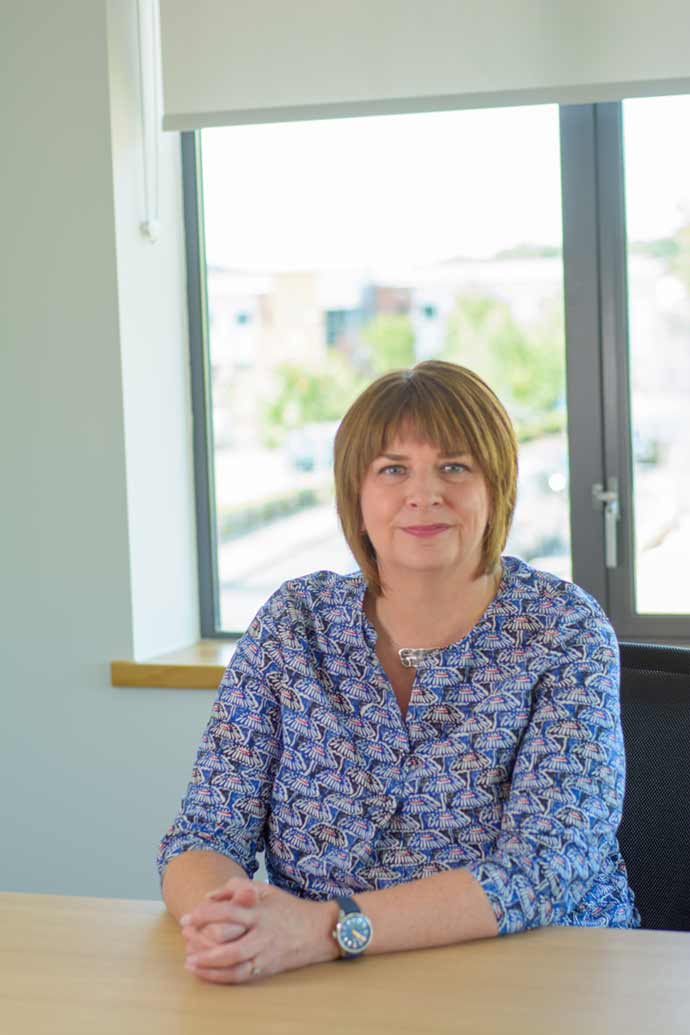
That learning is helped by constant feedback from a team containing considerable experience of its own. Many employees have spent decades in financial services, while Charlie Gillespie brings another perspective as chairman and mentor to his fellow founders.
Luke is keen to stress that they’re not running an autocracy. “It’s not a top-down management structure. We like to think it’s very democratic. We learn from them and we make decisions with them.”
“If we realise something’s not working, or we’ve done something wrong, we’ll just change it,” Ketan says. “There’s no waiting for a committee or a decision-making process.”
Technology inevitably forms part of that modern infrastructure. Fintrel is enthusiastic about the efficiencies AI can create in areas such as administration and data analysis, but the founders are much less convinced that technology changes the fundamental human proposition of financial planning.
For all the talk about algorithms transforming professional services, Ketan keeps returning to the image of two people sitting across a table.
“At the end of the day, clients just want to sit across the table from you, have a cup of tea and talk things through.”
It brings us back to the straightforward ideals at the heart of it all. Money is personal. Decisions can affect not only an individual but their children and grandchildren. As such, trust is difficult to automate.
The ambition is therefore to combine the capability of large financial organisation with the types of relationships more often associated with a smaller, independent practice.
Luke recalls an early conversation with Charlie about the level of attention traditionally available to the wealthiest private banking clients.
“The direction of travel is: how do we give everyone that level of service?” he says. “How do we get the level of service that you’d expect to receive as a £5m client in a private bank to a working family who have kids and are saving for their retirement? If we can bring that client care and service model to that family, then we’ve won.”
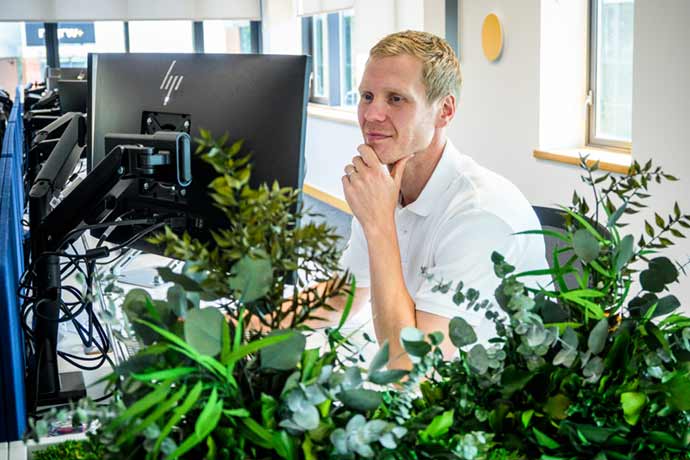
That breadth is already reflected in the firm’s work. Luke says its infrastructure allows Fintrel to advise clients ranging from first-time buyers to entrepreneurs dealing with the proceeds of substantial business sales.
There is a significant business-to-business proposition too, particularly relevant to South Yorkshire’s SME community. Fintrel has specialist employee benefits consultants advising companies on areas including workplace pensions, private medical insurance, income protection and death-in-service cover.
The founders believe many employers underestimate how accessible a comprehensive benefits package can be, particularly at a time when attracting and retaining good people remains a challenge.
“One of the first things we did when we set this firm up was look at our staff,” Ketan says. “We’ve obviously got the shares and the ownership, but death in service, pensions, private medical, income protection – it’s a full suite of benefits for our staff. So we can obviously offer that to business owners across the region, and we do.”

“We think we’re quite specialist in the business-owner space,” he continues. “Whether it’s retention, tax planning, sitting with their solicitors and accountants, and then when they eventually sell, helping out with that whole process.”
Talk turns to the local business scene and, although Fintrel sees itself firmly as a national business, with satellite offices in Derby, Lincoln and Kent and ambitions to expand its presence elsewhere, they stress that Sheffield will remain its headquarters.
Ketan says becoming part of that ecosystem matters. “If you’re a business owner in Sheffield, we want to get to a point where they know who we are and we’re the first people they go to see.”
The freedom of being independent has also allowed the founders to choose the professional relationships and suppliers they want around them. They talk enthusiastically about developing connections with Sheffield businesses and advisers, while even some of the smaller details around the office, from coffee to branded merch, have been sourced locally.
It is another small but meaningful reflection of the wider philosophy. With no distant parent company or external owner shaping those decisions, Luke and Ketan can simply ask what they think is right for the business, its people and its clients, then act on it.
And while much about Fintrel feels new, the principles underpinning it would be familiar to generations of financial advisers: know your clients, earn their trust, charge fairly, give good advice and be there for the long haul.
It feels particularly fitting for two financial planners who spend a good chunk of their working lives asking clients to think in decades. When the opportunity came to build their own company, they decided the same idea should apply to themselves.
“If you’ve got something to drive you other than economic success, then you’re probably more likely to do better out of it,” Luke says. “For us, money isn’t what’s driving us. It’s all the other stuff we’ve talked about today.”
The closing question is the standard one. Where would you like to be in five or 10 years’ time? For all the early growth, both are clear that size alone will not determine whether they have built the business they set out to create. What matters is whether the principles they started with remain intact.
“If in 10 years we’re still independent, still employee-owned, still attracting exceptional people and clients are still recommending us to their friends and families, I’ll regard that as success,” Luke says.
“Scale is useful, but only if it strengthens those things rather than dilutes them.”