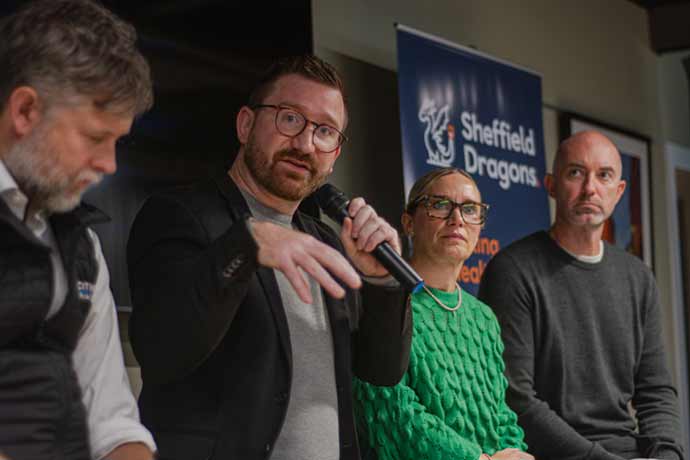
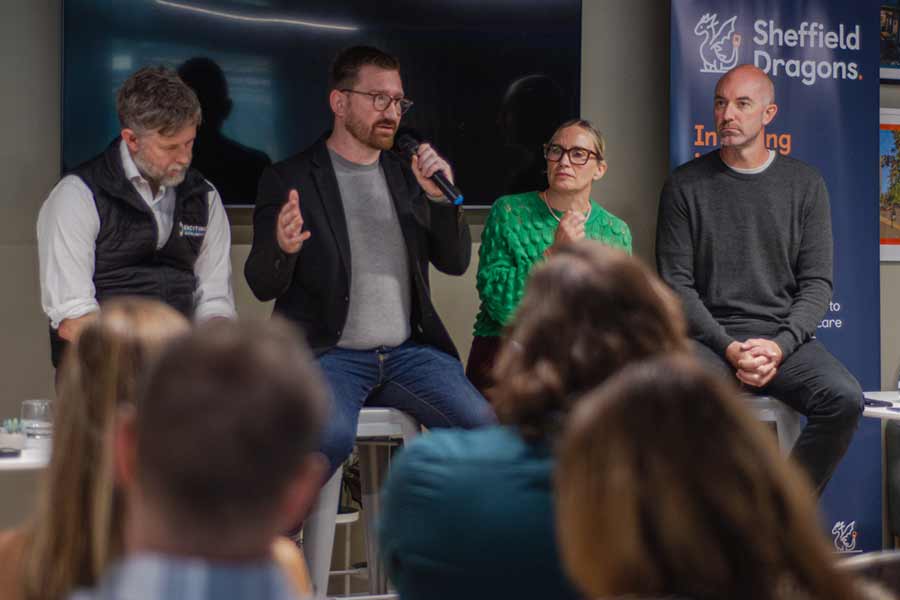
What will it take to build more globally successful businesses from South Yorkshire? At the latest unLTD Business Breakfast, held at Pennine 5, Phil Turner explored that question with Tom Wolfenden of Sheffield Technology Parks and the Innovation Spine, Tim Craggs of Exciting Instruments, Gary Neville of Startwell Ventures and Yvonne Asquith, head of Business Sheffield. From lab space to investment, here are five key takeaways from another lively discussion.
1. A Sheffield base can support global ambitions
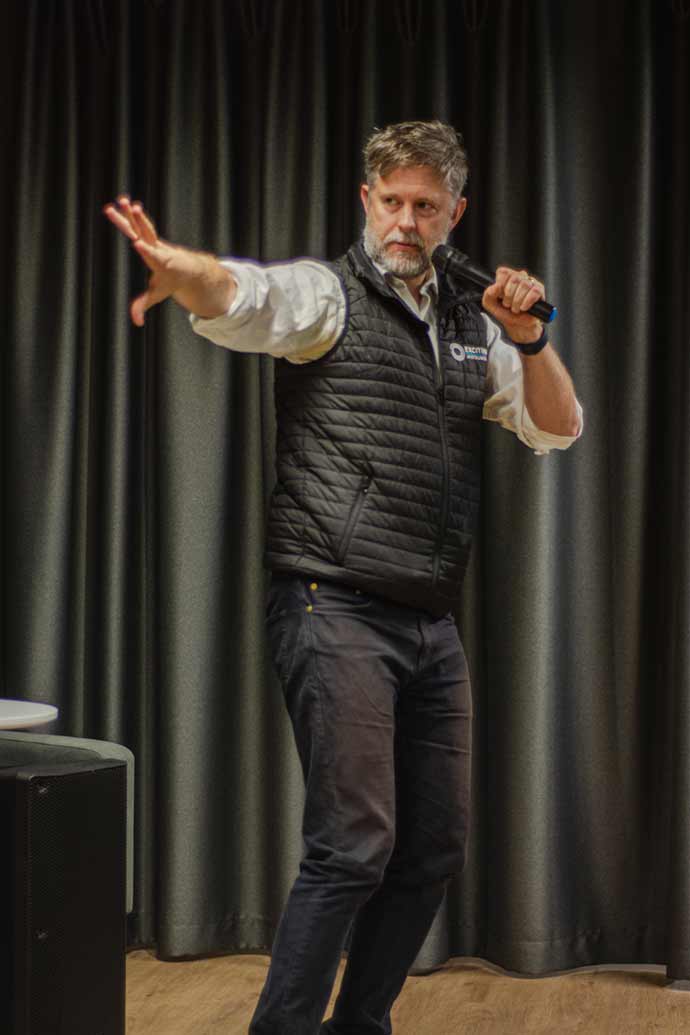
Tim, founder of Exciting Instruments, explained that his company offered a working example of the journey Sheffield wants more businesses to take. Spun out from Tim’s University of Sheffield research in 2021, they make instruments capable of detecting individual molecules, identifying their shape and observing how they interact.
Its journey took it from a university laboratory through Sheffield Technology Parks, support from fellow tech company Razor and UKSE’s Innovation Centre, before securing £4 million in investment led by Northern Gritstone and moving to Pennine 5.
“We’ve had 60% of our sales in the US from day one,” Tim said. “Our first instruments went into the US.”
The company now has customers across Europe and teams in Boston and Germany. But, crucially, behind that international reach is a local support network.
Tim praised Sheffield’s responsiveness, while acknowledging the demands of helping build that support system alongside running a company. The challenge now is making the route easier for those following behind, with appropriate spaces and support available as businesses grow.
2. The right space can bring businesses back
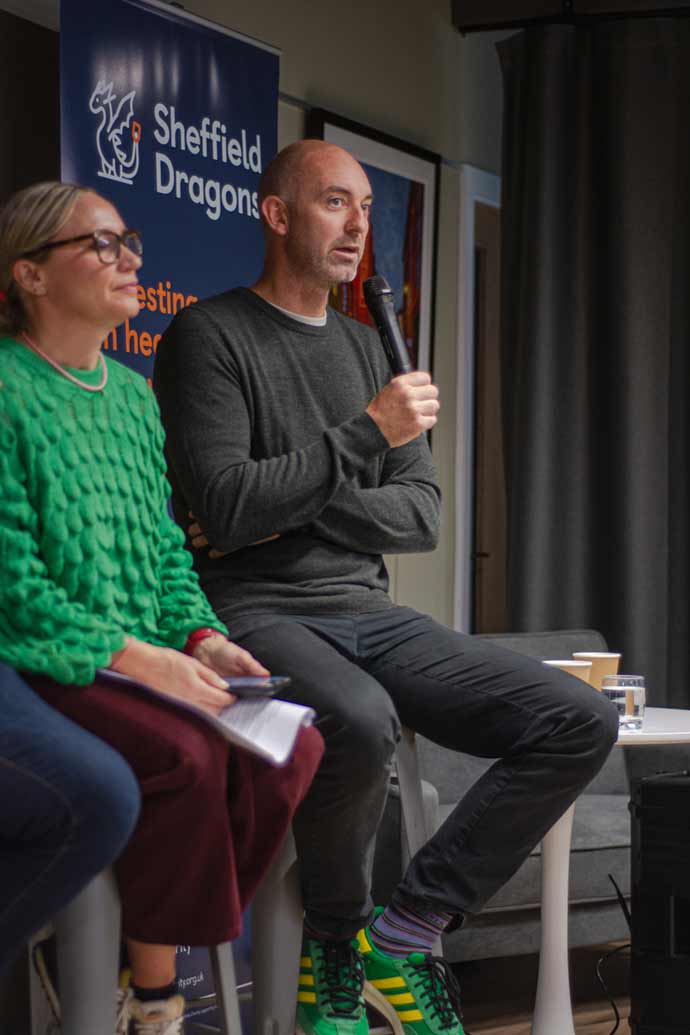
Sheffield’s innovation ambitions began with a practical problem: companies could not find the facilities they needed. Yvonne recalled discovering that the city was missing out on tech investment enquiries because growing businesses wanted central space it couldn’t offer.
Tom traced the Sheffield Innovation Spine’s origins to the same issue. Businesses were leaving for locations with established facilities and investment networks.
“It actually started with a single problem: one company couldn’t find lab space,” he explained.
The response is already making a difference. Sheffield Technology Parks has converted 40% of its space into small-scale laboratories, with Tom reporting that four companies which previously left have relocated back.
The wider Spine is a 20-year vision connecting research, innovation and workspace across a 190-acre city district. Success will depend on continuing to provide suitable facilities before growing businesses are forced to look elsewhere.
3. Investment follows customers, and funding gaps remain
Gary highlighted the importance of helping founders develop the commercial skills to match their technical expertise. Alongside a strong product, businesses need to demonstrate customer demand and a clear opportunity for growth.
“I’d love to see a lot more focus, when it comes to investment, on the growth side and the sales side,” he said.
His point was that practical support with sales could help more founders turn promising ideas into established businesses, strengthening their case for investment along the way.
There were different perspectives on where capital is needed. Yvonne identified pre-seed and seed funding as gaps, while Tim emphasised the larger cheques required to scale.
Tim also called for acquisitions and stock market listings that would allow successful founders to reinvest money and experience locally. That cycle would demonstrate a maturing ecosystem, giving the next generation access to people who have already built and grown businesses here.
4. AI is changing what growth looks like
One of the discussion’s most striking examples came from Tom, who highlighted Chalkie, an AI lesson-planning business that emerged from Sheffield Technology Parks’ incubator.
“Their hook is that they give Sunday afternoons back to teachers. It’s a really good problem they’re addressing and a really good solution,” he said. “They’ve got £8 million annual recurring revenue with three staff. It’s absolutely incredible.”
The implications extend beyond a useful classroom tool. Businesses can now generate substantial revenue without the staffing levels previously associated with that growth.
For a city planning future employment and workspace, that raises difficult questions. Tom argued that the Innovation Spine must remain adaptable as assumptions about company size and job creation change.
Gary suggested AI was also shifting investor priorities, with commercial traction becoming more important as technology becomes easier to create or replicate. Both saw an opportunity for Sheffield to respond quickly, provided its institutions adopt the entrepreneurial mindset they want to encourage in founders.
5. Sheffield needs a shared pitch, backed by action
The panel repeatedly returned to the need to explain Sheffield’s offer confidently. Affordability, collaboration and quality of life matter, but businesses considering relocation also need a coordinated welcome and a clear route into local networks.
Tom described showing visiting Colombian entrepreneurs the wider city alongside its business facilities. Their subsequent enquiry about establishing a UK subsidiary illustrated why selling Sheffield requires more than offices and grants.
“You need to really sell the place,” he said. “We’ve talked about businesses selling their products. We need to sell the product that is Sheffield as well.”
Yvonne pointed to the Landing Pad partnership as a way to coordinate that message, while Tim called for a single front door for enquiries.
Gary argued that attracting experienced founders internationally could accelerate progress. Yvonne also stressed that entrepreneurship must reach more Sheffield communities, with relatable role models and practical support. A stronger innovation economy needs to welcome newcomers while opening doors for people already here.
Want to get involved in the next discussion? Hit the link for news of our upcoming panels and networking events.